Good Things Take Time
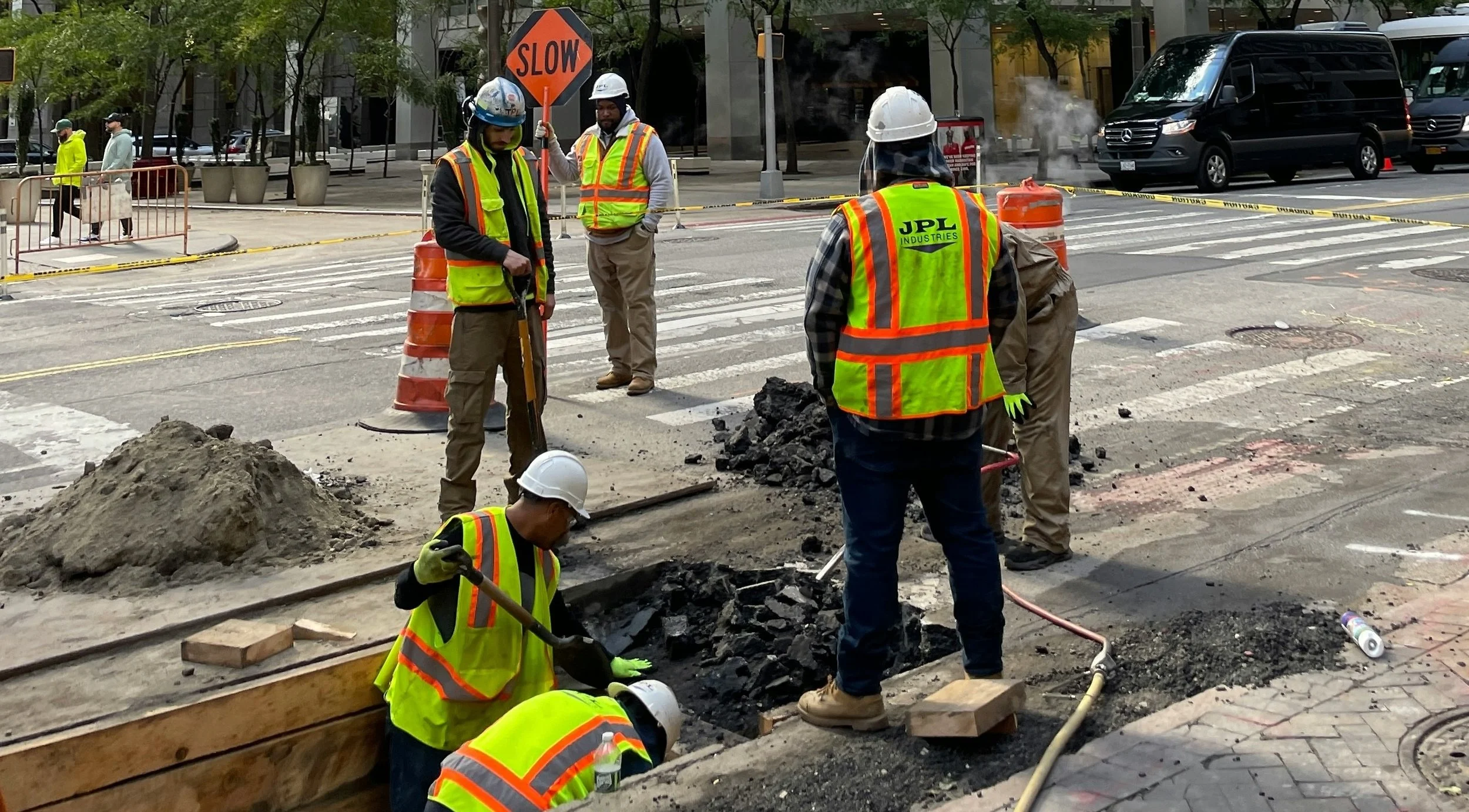
Photo credit: Narno Beats | Unsplash
Larry Sheckler walked out of the funeral home carrying the urn that held his sister’s ashes. It was an awkward receptacle—a little too big to palm with one hand, but small enough that using both felt uncomfortable. Like when stairs are the wrong height and you can’t decide whether to take them two at a time or one.
He was the last living Sheckler in Covington. At least that he knew of. Both his parents were gone, and now his sister. Neither he nor she had any children. No uncles or aunts. No cousins. Not even any pets. Just Larry. All alone.
His boss at the UPS Store hadn’t asked why he needed the day off, and Larry hadn’t told him. He so rarely took personal days that he’d accumulated weeks of vacation. Larry hadn’t taken a real vacation in more than twenty years. He was tired. His body, his mind. He was very tired.
He carried the urn to the parking lot. But he didn’t stop at his car, a 2013 Buick Regal. His leather Rockports led him to the edge of the blacktop, where he stepped over a curb and then trod across a grassy median. He shifted the urn to the crook of his arm and walked on.
Next to the funeral home was a bank. Not his bank. Just a bank. Larry went inside.
The bank had a nice lobby. Clean, tile floors that squeaked under his rubber soles. A fake plant in the corner and a sign that said Good Things Take Time.
Larry approached one of the tellers. She eyed the urn as he set it on the counter next to her window.
“Good morning, sir. How can I help you?”
Larry didn’t know what to say. He didn’t know why he was in the bank. He didn’t even have an account there.
“I’m all alone,” he said.
The teller knitted her brow. “Pardon me, sir?”
“I said I’m all alone.”
The teller edged her seat back a few inches. Her hand crept along the rim of the counter.
“Don’t do that,” Larry said. He was talking to himself, practicing a technique he’d read about online. Challenge the negative thoughts when they come. Talk to them directly and tell them to stop.
The teller froze. She lifted her hand from the counter to show she was cooperating. A look of fear on her face.
“What am I supposed to do?” Larry asked.
“What do you want to do?” she said with caution.
“I want to…” Larry stopped. “I don’t know.” He rested a hand on the urn. His sister would know. She was better at knowing things than he was.
“Sir, let me call my manager over. Is that okay?”
“It isn’t necessary.”
The teller fidgeted. Her voice trembled. “Sir, do you need help?”
Larry blinked. He shifted his eyes away from the urn, over to the teller. The woman’s face looked distraught. Larry deduced that he’d made a social error, which was not uncommon for him. He tried to lighten the mood with a joke. “A million dollars.”
He’d never been good at jokes.
The teller’s eyes widened. She looked at the urn and then back at Larry. She opened the bank drawer with shaking hands. “We don’t have that much in the drawer, sir.”
Larry wasn’t listening. He was thinking about how nice it would feel to rest. To lie down for a long time and not get up. A week. A month. Maybe longer. He was so tired.
He caressed the metal urn with his fingers.
“I only have about eight thousand here,” the teller said. She flicked her thumb over a stack of cash in her drawer.
“Huh?” Larry said. “Okay.”
The teller emptied her drawer of cash. She put the bills in a money bag, zipped it up, and laid the bag on the counter next to the urn.
“Please don’t hurt me,” she said. “I have two daughters.”
Larry stared at the urn until his eyes unfocused. “What should I do with this?” he said, still fingering the smooth surface.
“Please just take it and leave.” The teller’s voice shook. She was on the verge of tears. She closed her eyes and waited.
Larry picked up the urn without even noticing that the teller’s eyes were squeezed shut like she was waiting for a bomb to detonate. He left the money bag on the counter and retraced his steps across the squeaking floor, past the fake plant. Good Things Take Time.
A construction crew was digging a hole outside the bank. Two men were standing next to the hole, staring down into it. Larry carried the urn up to the men and peered into the hole. A man was down there, wearing a yellow vest, shoveling dirt. The two men above ground noticed Larry. They nodded. No one spoke. The hole was so deep that the digging man couldn’t get out unless one of the others helped him.
“New sewer line,” one of the men said. He fished around in his pocket until he found a pack of cigarettes. He took one out and lit it. Blew the smoke over his shoulder. Larry didn’t know anything about sewer lines.
The smoking man said, “What you got there?”
Larry had forgotten about the urn. He presented it with both hands, like a gift. Like it contained frankincense, and the construction man was baby Jesus.
“What’s in it?”
Larry started to explain what was in the urn. For some reason, he couldn’t come up with an answer. He shrugged and tucked the receptacle back under his arm. The man in the hole said something in Spanish. The third man knelt down and helped him up. For a second, Larry thought they might both fall into the hole, but they didn’t.
“Almuerzo,” said the man as he dusted himself off.
The empty hole looked cool and quiet, Larry thought. A nice place to lie down and rest. Maybe the men would let him rest there while they ate lunch.
He didn’t ask. Instead, he kept walking.
After a while, Larry had gotten far from the funeral home. He continued on, wondered how long he could leave the Buick in the parking lot before they would tow it. A week, he thought. After a week they would have it towed.
Cars roared in the distance as Larry approached I-75. He’d never walked near an interstate before. The traffic was much louder than he thought it would be. He came to the onramp and kept on going, right up the slope. An eighteen-wheeler downshifted and chugged up the ramp, gaining speed. The wind from the truck billowed Larry’s suit jacket.
Up ahead, just before the traffic merged, a car had pulled over on the shoulder. It was a yellow convertible. As Larry approached, he saw that the car was dirty and the upholstery had rips in it.
The man inside the convertible had his hair slicked back with pomade. His skin held a deep tan, almost orange. He reminded Larry of the guy who advertises juicers on TV. His head was turned sideways, watching Larry approach. He flashed a grin full of gleaming white teeth.
“Which way you headed, partner?”
Larry walked up to the driver’s side of the convertible. He felt the speeding traffic radiating through the concrete, deep into his bones.
“I don’t know,” he said.
“You don’t know?” The man laughed. “How in the hell do you not know where you’re headed?”
Larry offered the urn. “I was trying to find a place to put this.”
“Oh,” the man said, deflated. “Here I thought maybe you needed a ride. I could use a companion. Heading all the way to Miami. Nonstop, baby. All day and night.”
Larry didn’t respond.
The man flashed another grin. “Well, what in the sam hell is it you got there anyway?”
Larry started to take off the lid.
“No—don’t worry about it, fella. I don’t need to know.”
Larry paused with his hand on the lid.
The man gave a sly smile. “Did you say you’re needing somewhere to put it?”
Larry nodded.
“Hell, I’d take it off your hands for you.”
“You would?”
“Why sure. Looks like a nice vase. I could use one like that to put flowers in once I get to Miami. They got flowers all year down there.” He started to take the urn from Larry’s outstretched hands and then stopped. “Let me ask you, though, you got any money on you? I’d have to ask for a little…fee. Like a convenience charge, you know what I’m saying?”
Larry thought about the hole that the construction workers had been digging. About how much he’d wanted to lie down in it. He wished he’d asked them when he had the chance. If only he could be lying in that hole right now.
He set the urn on the hood of the convertible and took out his wallet. He opened the wallet and looked inside. There were dollar bills tucked in the leather fold. He didn’t know the amount. It was too much hassle to figure out. He handed the wallet to the man in the convertible.
A surprised look spread across the man’s face. He didn’t hesitate, just took the wallet and laid it on the passenger seat. “That’ll do.” He chuckled. “Partner, you just bought that vase a one-way ticket to Miami.”
Larry handed the urn over. The man took it like a priceless artifact. He put it in the passenger seat next to Larry’s wallet. “Well,” he said. “Nice doing business with you.”
The convertible kicked cinders against Larry’s legs as the man pulled out. Larry watched the vehicle merge into traffic. He was so tired. He couldn’t walk any more. Not a single step. He sat down on the side of the interstate. Cars zoomed by impossibly fast.
A hundred yards down the road, the man in the convertible opened the urn. He studied the contents until he realized what it was. He cursed and scowled. He lifted the urn with one hand and chucked it out the open roof. The urn bounced and skidded along the shoulder, coughing ashes across the filthy concrete.
Editor’s Note
As the editor of Brown Hound Press, my goal is to feature other writers. But every once in a while I may publish one of my stories if I have a good one to share.
I feel for Larry Sheckler. Life has beaten him down for so long that he can no longer stand it. He has something to offer the world but can’t seem to find anyone who wants it. A daydreamer with a wandering mind, Larry is never fully present in his own life—an escape artist confronted with his final set of handcuffs. Can he pick the lock and find release?
I also want to mention that my new novel, This Violet Night, is coming this summer. A Southern Gothic mystery haunted by the past, it follows four characters searching for connection and redemption. If you like the stories at Brown Hound Press, I think you’ll be into this novel.
This Violet Night will be published in August. Cover reveal, jacket copy, and pre-order details coming soon.
Josh Boldt, Editor
Story Track
“Flyin’ Shoes” is one of my favorite songs by one of my favorite songwriters, Townes Van Zandt. Larry Sheckler has reached the end of his rope. “So tired of these same old blues.” His march to the interstate is a final attempt to escape his mental prison, a hail mary to the gods of the highway, that great American portal that promises redemption, renewal, and reinvention. “It won’t be long till [he’ll] be tying on [his] flyin’ shoes.”