
Ghost Town
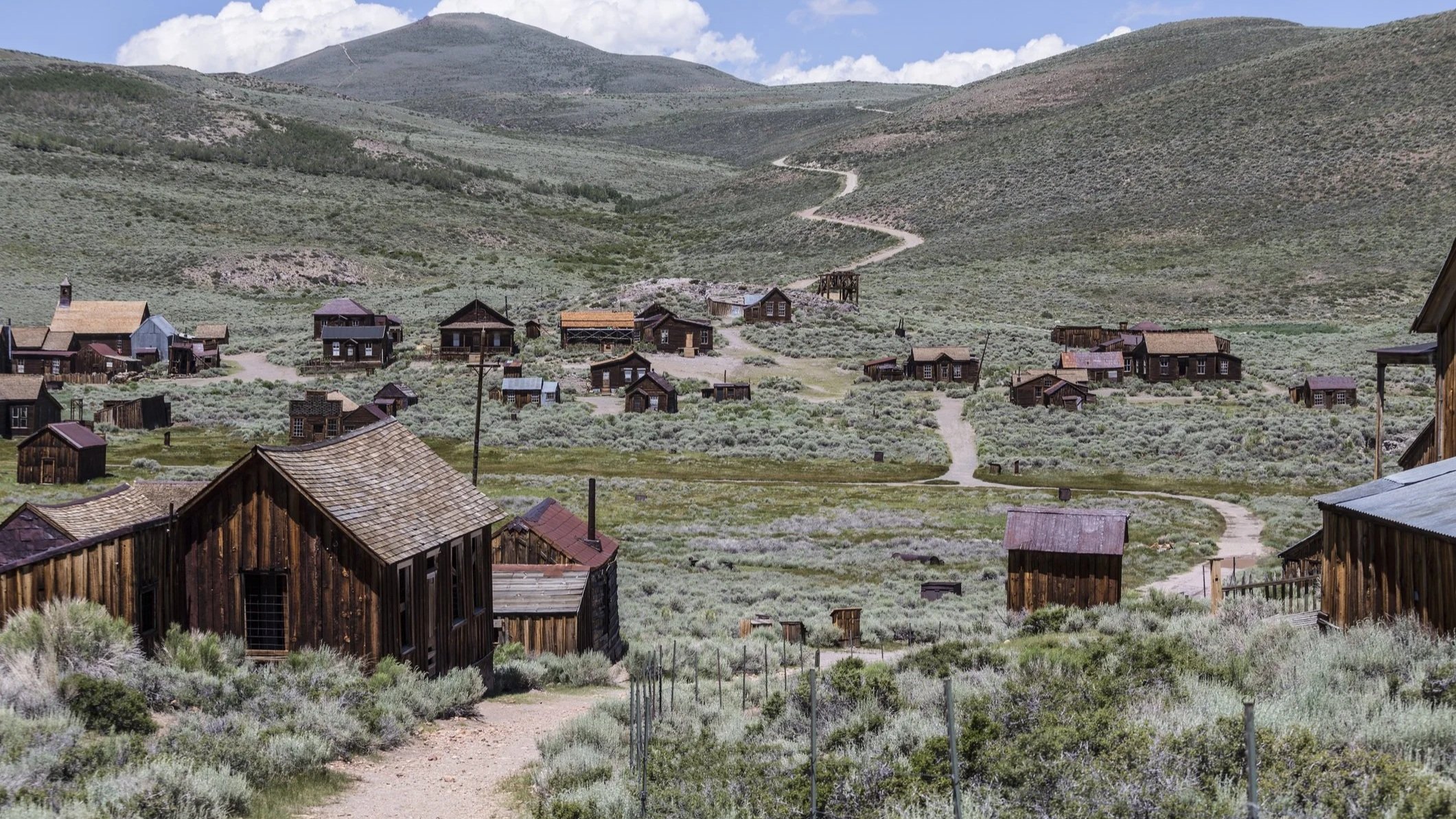
Photo credit: trekandshoot / Dreamstime.com
I was washing down the last bite of a very good hamburger with a diet soda when a special weather statement came on the TV above the bar. WINTER WEATHER WARNING read the banner. The announcer cut in over a generic sitcom that had been playing, predicting freezing rain and sleet, and black ice forming on Interstate 80 from Rawlins to Cheyenne by midnight.
“Reach your destination as soon as possible and settle in for the night,” he said. “Conditions will continue to worsen throughout the area. Major roads are expected to be frozen and impassable for the next thirty-six hours.”
“Well, shit,” Peter said, looking at the animated forecast of dangerous conditions projected for I-80.
The three of us—Peter, his friend Wayne, and I—had gone to Shirley Basin, Wyoming to hunt pronghorn for a couple of days. We had gotten our animals early in the day, and they were in the bed of Peter’s truck where they would stay plenty cold until we could get them to the processor in Fort Collins. On our way back to our campground we had stopped off for an early dinner at the Dip, a little bar and grill located in one of the area’s historic buildings.
“We need to get going,” he said. “The roads are going to freeze fast.”
“We’re driving south, right?” I said. “Won’t we stay ahead of it?”
Wayne snorted. “You sure don’t know much about our weather, Florida girl. It’s going to freeze in patches, and we’re not going straight south. We’ve got to turn either east or west on US Highway 30 and then turn back the opposite way when we get to I-80. Either way, we’re going to be in the shit.”
I adored Peter. He had been my brother’s best friend in college, and when my brother passed away in 1971, he stepped into the role of surrogate big brother. We saw each other only every couple of years, but we called one another regularly and when I graduated from Florida State University in 1975, he came from Colorado to Tallahassee to watch me walk across the stage.
Wayne was another story. He was about 5 feet 2, walked with a limp, and was always right on the edge of being in trouble with the law. I had asked Peter once why he was friends with Wayne.
“I guess I feel sorry for him,” he had said. “He got bit by a rattlesnake when we were kids and his mother didn’t believe him when he told her. By the time she figured out something was really wrong two days later, he had so much muscle damage he was never able to walk normally again.”
I stood up from the table. “Then I guess we’d better get going.” I picked up my hunting jacket, paid my check, and walked out into the night. The wind blew from the north, cold and damp, and smelled of sage and storm.
“It’s coming all right,” Peter said as he climbed into the truck. I crawled into the back seat while Wayne got into the front passenger seat. “Whether we go east or west, we have to double back on I-80 and by the time we do that there will be patches of black ice on the road.”
“What if we go straight south?” Wayne pointed out the windshield at a gravel road almost in front of us that disappeared into the near darkness. “That looks like it goes right where we’re going.”
“That’s a wide road and it has to go somewhere,” Peter said. “It looks like it runs along the west side of the river, so it’s down low and will be slower to develop black ice.”
We set off, gravel rattling against the undercarriage. Five minutes down the road, Peter braked sharply. An antelope buck stood in the middle of the road, frozen in the headlights. As we slowed to a stop he leaped away, disappearing into the darkness.
We started forward again, more slowly this time. Gradually the road sloped downward, and as it did the sleet turned to light rain. Twenty minutes later a couple of mule deer does crossed in front of us, followed by a massive muley buck.
“Looks like nobody has hunted here in a while,” Peter said. “I’d like to see that boy in daylight in front of me.” The road dipped and followed a line of trees, probably the edge of the river. We continued downward, the line of trees still on our left. Then our headlights picked up a yellow sign just off the road, turned so it was facing us.
US GOVERNMENT. NO TRESPASSING.
Another sign just like it was on the other side of the road. Peter stopped the truck and we all stared at it.
“Do you think they mean the property beside the road or the road itself?” he said.
“If they meant the road, there would be a gate across it and the sign would be on the gate,” Wayne said. “Just keep going.”
“It looks to me like we’re not supposed to be here at all,” I said.
“You two are pussies,” Wayne said. “Just go.”
Peter sighed and put the truck in gear. “I hope you’re right,” he said.
The road swung to the left, away from the line of trees, and the land changed from open plains to pastures. Barbed wire fences lined the sides of the road, and occasionally a horse or a couple of cows grazed on the other side of the fence, facing away from the wind.
As we rounded a curve, a wooden palisade topped with hay appeared in the headlights. Perhaps eight-feet tall and the same across, it had a yellow “3” painted on its side.
“What’s that?” I said.
“Ranchers use them to store hay away from the elk,” Peter said. “I’ve never seen anyone number them, though.”
We drove past more horses and cattle, and more numbered palisades dimly visible in the dark and drizzle. Fifteen minutes later the road widened and we were in a tiny town with a collection of small outbuildings and three houses, their lights bright in the icy drizzle.
“About fucking time,” Peter said. “We can find out where we are.”
He turned into the first driveway. The front window curtains were open and we could see through the living room into the kitchen. The television in the living room was off, and there was no satellite dish or antenna to suggest that turning it on would matter, anyway. Nothing moved in the house; no dogs, no cats, no people.
Peter grunted and put the truck in reverse. “Ok, that’s a little weird. Where is everybody?”
He pulled into the next driveway. Like the first house, the curtains were open and we could see the interior. The kitchen counters were bare, and two empty bookcases stood against the living room wall. No smoke rose from the chimney.
The curtains were open and the lights were on at the third house as well, but this house was totally empty of furniture.
“This is nuts,” Wayne said. “I’m going to get out and try to find someone.”
“No, you’re not,” Peter said. “I don’t know what this is, but this isn’t a normal little town. Stay in the truck.”
Wayne opened his door and put one foot on the running board of the truck.
Peter’s voice sliced through the night. “Get back in the truck. Now!”
“I’m going…” Wayne said.
Two figures came around the corner of the garage, light from the living room reflecting wetly off their black uniforms and the rifles they carried. Green lights glowed from each side of visors over their faces. They stalked toward the truck, one toward the driver’s door and one toward the back of the truck. Three more black-clad figures, also carrying rifles, came from the opposite corner of the house toward the truck.
“Shit!” Wayne said. He yanked his foot back inside and slammed the door.
“Fuck all!” Peter slammed the truck into reverse and hit the accelerator, throwing wet dirt and gravel into the air in front of the truck. As soon as we were clear of the driveway he dropped the gearshift into drive. I’d been leaning forward to see and I hit the back of the seat hard enough to make me yelp, but I didn’t care.
“Did you see that? What was it?” Wayne yammered.
“I don’t know, but we aren’t staying around to find out!” Peter slid the truck around curves and flew down straightaways as fast as the laws of physics would let him. Ten minutes later we slid to a stop at a four-lane paved road. At the top of a hill to our left, we could just see the lighted red and yellow sign of our campground through falling sleet.
When we got back to the 5th-wheel camper, Wayne kept yattering.
“We need to go back there tomorrow and whip some ass!” he shouted, as he limped up and down in the small living room. “We’ve got guns too. We can take them.” Finally, he stopped talking and went outside for a cigarette.
Peter sighed. “I’ve had about enough of him. I think this is our last trip together.”
“Where do you think we were?” I said.
“I think we stumbled into some kind of a government facility that’s hiding in plain sight. There are so many little ghost towns out here that nobody pays any attention to them. It would be easy to hide something in one of them. Whoever it was, I don’t think they were very happy that we stopped and poked around.”
“So, no going back when the weather is better to meet them?” I said, teasing him just a little.
“Oh, hell no. We’re going to be weather-bound for a couple of days and then I’m headed out of here.” Wayne came back into the camper then and we stopped talking, but the glances we exchanged said we were both still thinking about whoever—or whatever—we had seen.
The roads stayed icy for two days. Peter and I played Scrabble and card games, and we both did a lot of reading. Wayne tried to convince us that we needed to go back to the town in daylight, but Peter and I both ignored him. After a while he retreated to the recliner in the corner of the living room and sulked.
On the third day the weather cleared. The sun filtered through the trees, melting a thousand tiny fingers of ice. Water from the ice melt on the roads ran into the swirl of grey gumbo mud in the ditches. By noon the temperature was 55 degrees, with a predicted low in the 20s that night.
“We’ll head out in the morning,” Peter said. “I want to get the antelope to the processor.”
After lunch he and I started packing all the detritus from our trip into the exterior storage compartments of the camper. Wayne helped for a few minutes before he stamped up the steps into the camper and came back with his wallet and keys.
“I’m almost out of gas,” he said. “I’m going to fill up and get cigarettes.” He climbed into his old Bronco, slammed the door, and took off. The rear tires spun, slinging gravel behind the truck.
I watched him turn right at the road and then said to Peter, “Isn’t the closest gas to the left?”
Peter looked up from where he was cleaning a tabletop grill.
“Yeah, the closest gas is about half a mile to the left,” he said. “You’d have to go two exits on the interstate if you’re going right.”
“Well, he turned right,” I said.
“Oh shit,” Peter said. “Tell me he didn’t go back to that town.” He cleared the steps into the camper with two strides and came back out a minute later.
“His .30-06 and his .45 are gone,” he said. “He must have put the rifle in the Bronco when we weren’t looking and carried the .45 under his jacket.”
“So now what?”
“Right now, we keep packing,” he said. “It’s about four hours until sunset. Let’s give him two hours to get back and then we’ll go looking for him.”
Two hours later, we were done cleaning the camp and Wayne was still gone.
Peter sighed. “I really don’t know what to do,” he said. “I’ve known him a long time, but I think we were clearly warned to stay away.”
“Is there somewhere we can see into the town without going into it?” I asked. “At least that would tell us whether he’s there.”
We drove back toward the town, looking for anything that would get us up high so we could see. A sand road to the right led onto a hill. Our map showed the area as public land so we followed it until we rounded a curve and could see the half dozen houses and the numbered palisades beyond.
I climbed out of the truck and looked through my binoculars. Two vehicles were just passing the edge of town, heading in the direction of the campground. The vehicle in front was Wayne’s Bronco, and the one behind was a Chevy Suburban, dark green or black, I couldn’t tell. Late afternoon sunlight flared off the tinted windows, and then they went dark again.
Peter started to say something, then made a sound like wind going out of a tire. At the same time something big and dark blocked my binoculars. A very large Black man wearing military camo and black combat boots, carrying an automatic rifle across his chest, stared at me from under a black helmet.
I opened my mouth to speak but found I had nothing to say.
“Get back in the truck,” he said. I backed away from him and up onto the running board, my heartbeat pounding in my ears. Once I was inside he closed the door gently.
On the other side of the truck, another equally large soldier was putting Peter into the driver’s seat.
“Go back to your campsite,” he said before he closed the door. “Your friend will be there. Put him to bed and let him sleep it off. Don’t come back.”
We drove away in silence. Just as we reached the paved road, the Suburban—or one like it—passed across in front of us, headed back toward the town.
When we reached the campground my hands had almost stopped shaking. The Bronco was there, the doors closed and locked. Inside the camper Wayne was sprawled on the sofa, snoring softly.
That night I dreamed about being chased by men with glowing green eyes wearing camo and boots. I awoke to Wayne rattling around in the kitchen, making coffee and digging out a skillet. All he said was, “I’m hungry.” He cooked the last of the bacon and eggs while I made toast.
“So what happened yesterday?” Peter asked when we sat down to eat. Wayne said nothing for so long that I didn’t think he was going to answer.
“I don’t know,” he said finally. “I remember leaving here to go back to that town. The next thing I remember was waking up here this morning.”
“That’s it?” I asked.
“That’s it.” He put his dishes in the sink, put his gear in the Bronco, and left half an hour later. Peter and I finished cleaning up the camper, hooked up the truck, and pulled out about noon.
“That was quite a trip,” Peter said just before I got out of the truck at the Denver airport that evening.
“Yes, it was,” I said. “Do you think we’ll ever find out where we were?”
“I don’t know,” he said. “I’ll ask around some of my friends still in the military. But we may never know.”
I hugged him quickly before I got out of the truck, and he promised to get the meat from my buck shipped to me as soon as the processor finished with it.
I spent a couple Saturday mornings at the public library finding out what I could about south-central Wyoming. Peter was right about that area having its share of ghost towns, many of them unnamed. Lakota folklore mentioned Night Walkers, and the Navajos talked about Skinwalkers, but what we saw was human, likely military, and clearly dangerous. Peter talked to some of his hunting and US Army and Marine friends, but none of them had any answers, either.
One day in late spring Peter called me during my lunch hour. I was surprised to see his number come up on my caller ID at my desk, since we had had our regular semi-monthly conversation a couple of nights before.
“I have to tell you something,” he said.
“Well, hello to you too,” I replied. “What’s up?”
“Last night I was talking to someone I know from my days in the Corps. He’s still in the Marines, and he’s moved up quite a bit in rank. I told him about that night and asked him where he thought we were.”
“And?”
“He said, ‘You asshole! You were in a mobile missile silo. Every one of those numbered haystacks had a missile under it!’”
“Holy shit!”
“I know.”
“But why have the lights on and the curtains open? That doesn’t make sense.”
“I asked him about that. It makes sense if they’re trying to make it look like a real town to anyone doing satellite surveillance. It’s not deserted; people are coming and going. Vehicles going into a flat spot in the desert and disappearing is suspicious. But going into a little town isn’t.”
“Have you told Wayne?”
“I haven’t talked to Wayne since that night, and I don’t intend to. He’s called me several times and left messages and I haven’t answered. I thought I was done with him, and now I’m sure.”
He rang off and I sat at my desk. At least we had some answers, but they weren’t very comfortable ones.
A few years later, when Google Earth became a thing, I pulled up a satellite view of that part of Wyoming and found the road we had taken south from Highway 30 to I-80. I found a few buildings at a crossroads; the area was labeled “Wyoming Department of Transportation Maintenance Area.” There was no sign of haystacks or any military presence.
In the twenty-something years since that night, Peter and I have hunted together at least half of them. We still speak of it occasionally, and every now and then, when we hear a couple of hunters bragging about this experience or that, we look at each other from across the table or across the room and silently acknowledge the night we passed through a strange little unnamed town in southern Wyoming.
Editor’s Note
Sometimes you just want to read a good mystery. A story that reminds us about the strange things happening in the world that we know nothing about. Unexplained phenomena, government conspiracies, ghost towns, political coverups, straight-up weird shit that would shock us to know it is in our own backyard.
Carolee Anita Boyles delivers such a mystery in “Ghost Town.” We know right from the beginning that Wayne is going to get himself in trouble, and bless him for that, because it’s characters like Wayne who push the boundaries and help us all uncover the weirdness around us.
Josh Boldt, Editor
Story Track
I listened to dozens of songs about ghost towns and hauntings and conspiracies, but none of them were hitting right for this story. The lyrics were either too on-the-nose or didn’t match Carolee Anita Boyles’s writing in “Ghost Town.” I finally came across a new musician to me: Justin Johnson. His track “Ghost of the Mountain” needs no lyrics to convey the tone I was looking for. Imagine the noirish blues guitar as the characters sneak around the hills, spying on the abandoned town below them and searching for their missing friend.