
Emily’s Birthday
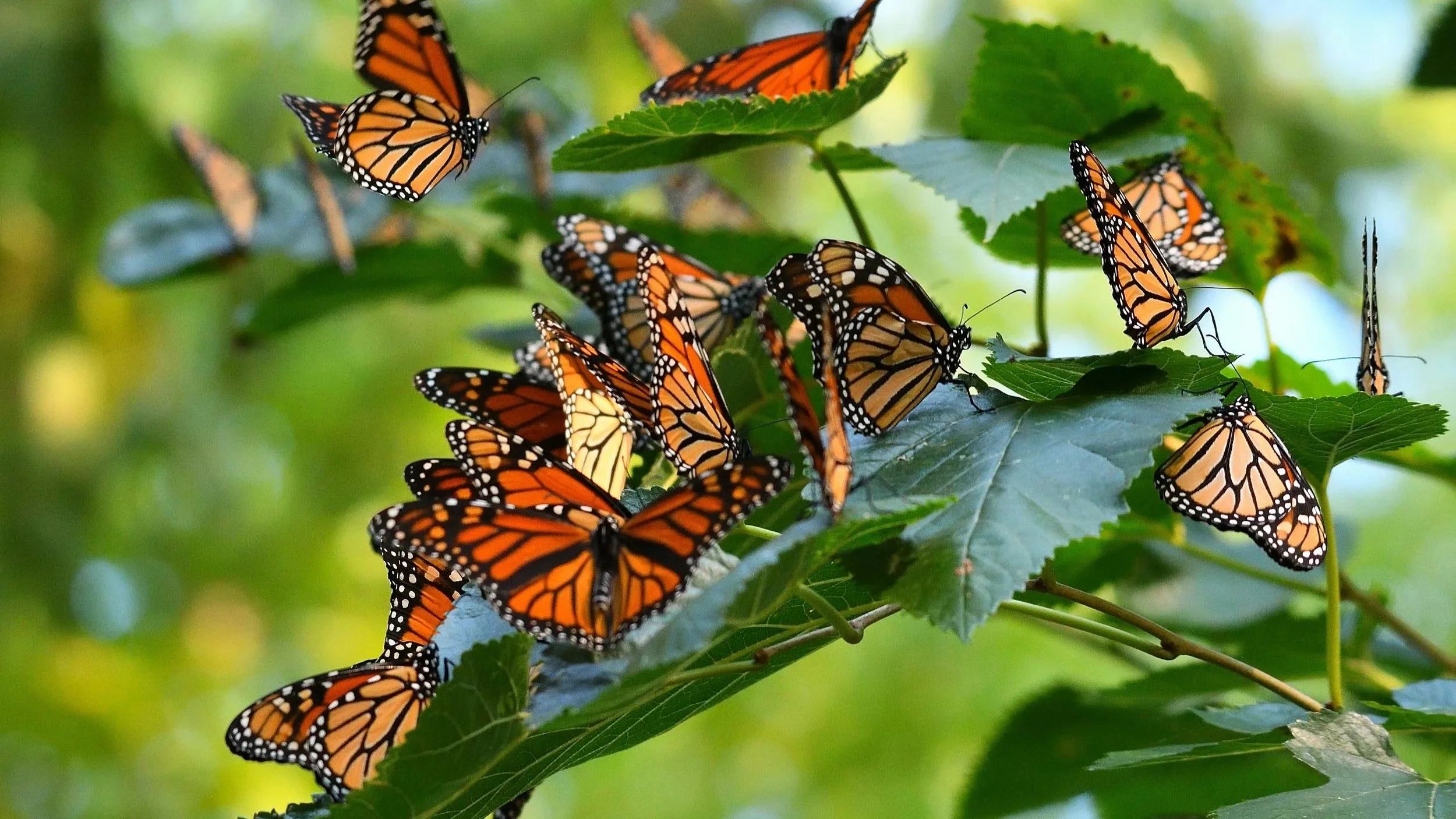
Photo credit: Alex Makarov / Unsplash
Mrs. Kowalski released the first butterflies in June, the week school let out. I was sitting on our front porch doing nothing when I saw them—fifty, maybe more—lifting out of her backyard in an orange-and-black cloud. They scattered across Ridgewood Drive, dipping and rising in the heat. One landed on our mailbox. Another got caught in the Hendersons' sprinkler next door.
My mom came out with iced tea and stood there watching.
"That's nice," she said. "For Emily."
Emily was Mrs. Kowalski's daughter. She'd died before we moved in, so I never knew her, but people talked about her the way they talked about the old bakery on High Street that used to make good bread—something that used to be there and wasn't anymore. Every June, Mrs. Kowalski did the butterflies. It was her thing.
"Why butterflies?" I asked.
"Emily loved them," my mom said. "It was her birthday yesterday. June fourteenth."
"Oh."
"Be nice to Mrs. Kowalski if you see her, okay?"
I said okay.
The butterflies were everywhere for a couple of days. I found one on the hood of my dad's truck, wings opening and closing slow like it was breathing. Another one was stuck to the window screen in my bedroom. By the weekend, most of them were gone—dead or flown away or eaten by birds. I didn't think about it much.
Then the next week, Mrs. Kowalski released more.
I was in the backyard throwing a tennis ball against the garage when I heard her back door open. I looked through the gap in the fence and saw her standing on her patio with a white mesh box in her hands. She opened it and the butterflies came out—not as many as the first time, maybe twenty or thirty. She stood there watching them, her hands at her sides, not smiling exactly but not sad either. Just watching.
One of the butterflies didn't fly. It crawled across the patio stones, dragging one wing. Mrs. Kowalski bent down and picked it up, held it in her palm. She stayed like that for a long time. Then she set it down in the grass and went back inside.
At dinner that night, my mom said, "Did you see Mrs. Kowalski released more butterflies?"
"Yeah."
"That's a little odd," my dad said. "She already did it once."
"Maybe she ordered too many."
"Maybe."
Nobody said anything else about it.
The third time was the following Tuesday. I was walking to the Speedway for a Slurpee when I saw her car in the driveway and the mesh box on her porch. She came out, opened it, and released maybe forty butterflies. This time they didn't scatter as much. The air was heavier, humid, and the butterflies kind of hung there in her yard, wobbling around the hydrangeas.
I stopped on the sidewalk. Mrs. Kowalski saw me and waved.
"Hi, Nathan."
"Hi."
"Want to help?"
I didn't know what that meant, but I said sure.
She went inside and came back with another box. Smaller. She handed it to me. Through the mesh I could see maybe ten butterflies clinging to the sides, their wings folded up.
"Just open it," she said. "They'll know what to do."
I opened it. The butterflies sat there for a second, then one by one they lifted out and joined the others. Mrs. Kowalski smiled at me.
"Thank you," she said.
"You're welcome."
"Emily would've liked you."
I didn't know what to say to that, so I just nodded. Mrs. Kowalski went back inside. I walked to the Speedway and got my Slurpee and didn't think about it again until the next day when my mom found three dead butterflies floating in our pool.
"This is getting ridiculous," she said.
By the end of June, Mrs. Kowalski was releasing butterflies twice a week. You'd see them everywhere—on car windshields, on trash cans, clustered around the streetlights at night. The Hendersons found one in their laundry room. Mr. Cho across the street found two dead ones stuck to his grill.
People started talking.
"She needs to stop," Mrs. Henderson said to my mom while they were getting mail. I was shooting hoops in the driveway and heard the whole thing. "It's unsanitary. They're dying all over the place."
"She's grieving," my mom said.
"She's been grieving for eight years. At some point you have to move on."
My mom didn't say anything to that.
The first week of July, Mrs. Kowalski started releasing them every day.
I'd see her in the morning, before it got too hot, standing in her backyard with the boxes. Sometimes one box, sometimes two. The butterflies would lift out in waves, and she'd stand there with her arms crossed, watching. She started wearing the same thing every time—a yellow dress with white flowers on it. My mom said it was probably Emily's favorite.
The butterflies weren't doing well. You could tell. They'd come out of the boxes slow, like they were tired, and they wouldn't fly far. Most of them stayed in Mrs. Kowalski's yard or the yards right next to hers. They'd land on things and just sit there. Some of them didn't even try to fly—they'd just crawl around on the patio until they stopped moving.
I found one on our driveway that was still alive but couldn't fly. Its wings were torn. I picked it up and it crawled onto my finger, its legs so light I could barely feel them. I didn't know what to do with it, so I put it in the grass under the bush by our front porch. When I checked later, it was gone. Something probably ate it.
On July ninth, someone called animal control.
I was sitting on the porch reading when the truck pulled up. A woman in a khaki uniform got out and knocked on Mrs. Kowalski's door. They talked for a while—I couldn't hear what they were saying—and then the woman left. Mrs. Kowalski stood in her doorway watching the truck drive away.
That afternoon, she released more butterflies anyway.
My mom went over to talk to her. I watched from the living room window. They stood in Mrs. Kowalski's driveway for maybe ten minutes. My mom kept touching Mrs. Kowalski's arm, the way she does when she's trying to make someone feel better. Mrs. Kowalski kept shaking her head.
When my mom came back, she looked tired.
"What'd she say?" my dad asked.
"She said Emily told her to do it."
"Told her?"
"Yeah."
My dad was quiet. Then he said, "That's not good."
"I know."
"Should we call someone?"
"I don't know. Maybe. I don't know."
Nobody called anyone.
The next day, Mrs. Kowalski released butterflies in the morning, at lunch, and again in the evening. I counted—three separate times. The butterflies barely made it out of her yard. Most of them just landed on her patio furniture or the fence or the side of her house. By evening, there were dead ones everywhere. On the sidewalk, in the gutter, stuck to people's screen doors.
Mr. Cho came over to talk to my dad.
"This has to stop," he said. "It's gotten out of hand."
"I know."
"Someone needs to talk to her."
"Linda already tried."
"Well, someone needs to try harder."
My dad didn't say anything.
That night, I couldn't sleep. It was too hot and my fan wasn't doing anything. I got up to get water and looked out the kitchen window. Mrs. Kowalski's porch light was on. She was sitting on her back steps in the yellow dress, just sitting there, not moving. There were butterflies on the steps around her—I couldn't tell if they were alive or dead.
I almost went outside. I don't know why. I didn't.
The next morning, Mrs. Kowalski was in her yard at 6 a.m., releasing more butterflies. I watched from my bedroom window. She wasn't wearing the yellow dress this time. Just regular clothes—jeans and a t-shirt. She opened the box and the butterflies came out and she stood there with her hands in her pockets, watching them struggle to fly.
Then she looked up at my window. Right at me.
I stepped back, but I think she saw me.
At lunch, she knocked on our door. My mom answered. I was in the living room pretending to watch TV but really listening.
"Hi, Linda," Mrs. Kowalski said. "Is Nathan home?"
"He is. Is everything okay?"
"Everything's fine. I just wanted to give him something."
My mom called me over. Mrs. Kowalski was holding a small plastic container—the kind you'd keep leftovers in. Inside was a chrysalis, hanging from a twig.
"I thought he might like this," Mrs. Kowalski said. "It'll hatch in a week or so."
I took the container. The chrysalis was pale green, slightly translucent. I could see the shape of something inside.
"Thank you," I said.
"You're welcome." Mrs. Kowalski smiled, but it didn't reach her eyes. "Take good care of it."
She left. My mom closed the door and looked at me.
"That was nice of her," she said.
"Yeah."
"Are you going to keep it?"
I looked at the chrysalis. "I guess."
I put it on my dresser, next to my lamp. For the first few days, I checked it every morning and every night. Nothing changed. It just hung there, the thing inside perfectly still.
Mrs. Kowalski stopped releasing butterflies on July fifteenth. I don't know why. She just stopped. The boxes stopped appearing on her porch. The yellow dress stopped coming out. She still went outside sometimes—I'd see her watering her plants or getting her mail—but she didn't look at anyone. She didn't wave.
The neighborhood went back to normal. People stopped complaining. The dead butterflies got swept up or washed away in the rain. By the end of July, you wouldn't have known anything had happened.
Except for the chrysalis on my dresser.
I kept checking it. Every day. My mom asked about it once—"Has it hatched yet?"—and I said no, not yet. She didn't ask again.
A week passed. Then two. The chrysalis didn't change. It stayed the same pale green, the same shape, the thing inside perfectly still.
I looked it up online. Painted lady butterflies were supposed to emerge after seven to ten days. It had been three weeks.
I thought about throwing it away.
On August third, I woke up and checked the chrysalis like I always did. It was darker now—brown instead of green. Shriveled. I opened the container and touched it with my finger. It was hard, brittle. Empty.
Nothing was inside.
I don't know what happened to it. Maybe it died. Maybe it was never alive to begin with. Maybe Mrs. Kowalski knew that when she gave it to me.
I kept it.
That afternoon, I saw Mrs. Kowalski in her backyard, sitting in a lawn chair, drinking iced tea. No butterflies. No boxes. Just her.
She saw me watching through the fence and raised her glass slightly. Not quite a wave.
I raised my hand back.
She smiled.
School started two weeks later. Mrs. Kowalski put up Halloween decorations in October—a skeleton on her porch, fake cobwebs. Normal things. She never mentioned the butterflies. I never asked.
The next June, on the fourteenth, I woke up and looked out my window.
Mrs. Kowalski's backyard was empty. No boxes. No yellow dress. Just her, standing on the patio in jeans and a t-shirt, arms crossed, staring up at the sky.
Waiting.
I watched her for ten minutes. She didn't move. Didn't go inside. Just stood there, looking up.
Nothing came.
I still have the container. It's in my desk drawer, and sometimes late at night I think I hear something moving inside it. But when I open it, there's nothing.
Editor’s Note
Who doesn’t love butterflies? Dozens of beautiful splashes of color speckling the sky. I was first struck by the imagery in Nivara Lune’s story, but the metaphor is what sold me. The symbol of these fluttering insects acting as a stand-in for the release of grief. It’s interesting how the various characters respond to Mrs. Kowalski’s actions–our multi-faceted human nature on display. Also the conundrum of the chrysalis. What does it represent for the narrator and why does the story end as it does?
Josh Boldt, Editor
Story Track
“When I’m sad, she comes to me with a thousand smiles she gives to me free.” So say the lyrics of Jimi Hendrix’s “Little Wing.” In Nivara Lune’s story, Mrs. Kowalski’s butterflies are a physical representation of the memory of her daughter. The act of releasing them resembles a seance, a conjuring of Emily’s spirit so that her mother can again and again experience those thousand smiles. Like the butterflies, Mrs. Kowalski wishes Emily (and herself) to be free. “Fly on, little wing.”