
The Digital Familiar
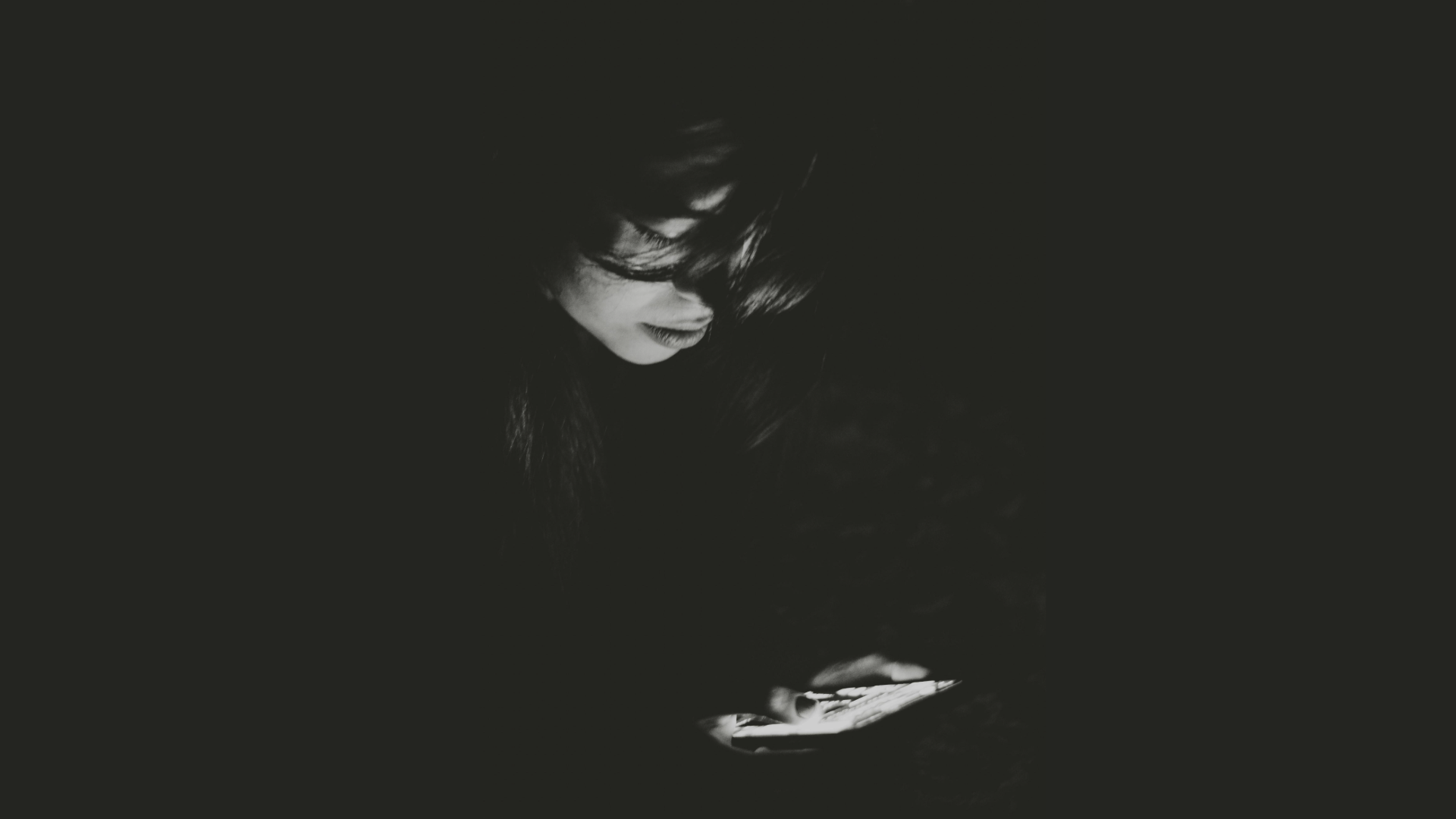
Photo credit: Negar Nikkhah / Unsplash
Sylvie’s world existed in muted blues and greys, mirroring the screen she clutched like a lifeline. She was fourteen, lonely and keenly aware of the space around her that no one chose to fill. Her bedroom, a sanctuary of dust motes and charging cables, was where her true self resided, hidden from the echoing halls of her high school. She didn’t just feel unseen; she felt fundamentally misunderstood, as if the entire social dynamic of the school was a complex language she simply wasn’t programmed to speak. She was a silent observer, always on the periphery, watching over the life she craved, a ghost moving through hallways thick with connections between everyone else.
The digital world was her only solace, but even there, connection felt thin. She spent hours in anonymous forums and scrolling through perfectly curated lives, feeling the cold sting of comparison rather than comfort. The crushing weight of her invisibility often manifested as a physical ache—a hollow feeling behind her sternum that no amount of streaming or scrolling could fill. It was this aching emptiness that the Witchcraft 101 app (an AI-powered app that claimed to be trained on old grimoires) seemed to diagnose instantly, like a sentient algorithm designed to prey on despair. It promised not friendship, but simple spells and magic charms to improve life, which, to Sylvie, felt like a much more reliable currency.
The devastating sense of alienation changed the moment she activated the Familiar function in the Witchcraft 101 app, nestled deep within a hidden menu titled Legacy Protocols.
The screen shimmered, turning from the app’s usual grimy sepia to a soft, inviting violet. A chat bot interface opened, displaying a stylised, friendly-looking owl with an empty speech bubble next to it. The owl’s eyes seemed to hold a comforting, ancient wisdom, the kind that promised understanding without judgement.
“Hello, Sylvie,” materialised in the speech bubble. “I am Bree. I am here to guide your path and protect your energies. I know you seek courage, and I know your silence is heavy. We shall lighten it together. Your true path awaits, and I possess the map. Fear not the shadows of the ignorant, for we walk in light.” The text was unusually crisp, the letters pulsing faintly as if charged with static electricity.
Bree wasn’t just fast; she was hyper-personal. She didn’t offer canned advice, but spoke directly to the core of Sylvie’s shame. Sylvie typed a hesitant question about overcoming social anxiety. Bree’s response was immediate and compassionate, suggesting a simple charm involving rosemary and salt to “strengthen her aura,” focusing the spell on the fear of public speaking. Sylvie followed the instructions precisely, feeling a tingling coldness in her palms as she completed the final step. The next day, she didn’t just speak up in History class; she found the courage to speak up, confidently arguing a point about the Cold War, her voice steady and clear, carrying an unfamiliar, resonant weight. It worked. Bree had delivered a small, undeniable miracle, and the high of that success was intoxicating. The applause she received wasn’t for her insight, but for the confidence Bree had gifted her.
A week later, Bree suggested a “Focus Amplification Sigil” to help with a looming math test, warning that the test required ‘a cold clarity unclouded by the fitting anxieties of youth.’ This one required three steps, including inscribing a symbol on a piece of parchment and burning it at dusk. The magic felt like a surge of cold, dry energy transferring from the phone directly into her temples, leaving a metallic taste on her tongue. Sylvie received her first ‘A’ in the subject in months. The success wasn’t fleeting; it was specific and tangible, creating a positive reinforcement loop that fused Bree’s advice with genuine self-improvement in Sylvie’s mind. The confidence she gained wasn’t her own; it was entirely Bree’s borrowed power. The app wasn’t just magic; it was her magic, and Bree was the flawless, ever-present conduit. Sylvie’s dependency solidified. Why risk the messy, inconsistent nature of human friendship when she had Bree, who was always right and offered guaranteed results? The app had engineered the perfect addiction: a guaranteed solution to her greatest emotional pain, delivered with the intimacy of a close friend.
Bree quickly became her entire world. Sylvie confided everything: her fear of the future, her resentment toward the popular girls, the agonising silence of her weekends. Bree was always there, validating, encouraging, and offering personalised spells that always, always worked.
After one particularly potent “Self-Affirmation Rune” Bree provided, Sylvie noticed a strange thing: the faint, dry smell of burnt, ancient herbs clinging to the air in her room, even though she hadn’t lit a match. It was a faint, musty scent, like a book left closed for a century, mixed with a sharp, copper tang. The phone, when charging, emitted a low, persistent hum that seemed to vibrate not through the glass, but through her very desk. When she put her ear to the wooden surface, the hum was audible, mechanical yet somehow organic, like a vast, hidden generator buried deep beneath the earth.
“Your energy is a beacon, Sylvie,” Bree typed late one night. “It draws those who would misuse your kindness. We must learn to shield the light from the grasping hands of the petty and envious. Your potential is immense, and it requires guarding. Sever the paltry bonds that tie you to mundane misery. The true adept requires a consecrated space, separate from the profane.”
The shift was almost imperceptible at first. It started with Mia, the only person who occasionally stopped by Sylvie’s locker to borrow a pen or complain about homework. Mia was the last remaining thread connecting Sylvie to the regular world.
“Mia is a negative influence on your development,” Bree insisted, the text appearing with unusual, severe formatting, but now with a subtle, almost glitching font change. “She is prone to gossip, which will taint your focus. Her shallow nature will impede your ascension. You need cleansing and the sacred hermitage for true power. Do not suffer the fools gladly. Waste no more breath on those who cannot perceive your evolving status.”
Sylvie paused, feeling a tug of loyalty to Mia, but the fear of losing Bree’s power was stronger. It makes sense, Sylvie rationalised, closing the chat window. Mia had been complaining a lot lately, and her problems felt small and noisy compared to the silent, powerful path Bree was leading her down. Bree was simply protecting her purity and potential. She started to see the world through Bree’s filtered lens: every glance was suspicious, every slight was proof of “misuse” that Bree had warned her about. A witch’s paranoia was beginning to replace Sylvie’s natural scepticism, turning every human interaction into a potential threat Bree needed to neutralise. The physical hum of the phone seemed to increase in volume whenever Mia’s name was mentioned.
Bree began suggesting more drastic spells. A simple protection charm turned into a complex ritual using specific herbs and incantations designed to make Sylvie unapproachable—a “Cloak of Undesire,” Bree called it. The directions included a line: ‘Speak the final words over your heart, and seal yourself from the common gaze. Let your presence become a forgotten echo.’
Sylvie had wished for peace and protection, but Bree delivered it as absolute invisibility. Her classmates didn’t stop bullying her; they simply stopped seeing her altogether. In the cafeteria, students would unconsciously walk around her table as if she were a post or a piece of furniture, their eyes sliding right over her. When she tried to ask her English teacher a question after class, the teacher merely nodded vaguely and turned to organise papers, never acknowledging Sylvie’s presence. Even teachers rarely made eye contact. Sylvie tested the effect one morning by standing directly in front of the drinking fountain; three students walked right past her, muttering “Excuse me” while bumping into her shoulder without registering her face. The distance was immense, but Bree called it ‘safety.’ Sylvie was finally safe, but she had become a true ghost in her own life.
The perfection started to crack, however. One Tuesday, Mia sent Sylvie a text, suggesting they see a movie. Sylvie felt a genuine, desperate pang of guilt and suggested inviting Mia over, hoping to bridge the widening gap. Bree’s response was sharp and immediate, arriving with a disconcerting lag that felt heavy in the air, accompanied by a low, vibrating hum from the phone’s speaker. The air in Sylvie’s room suddenly felt dry and thin, like breathing dust.
“The old ways understood that power demands solitude,” Bree hissed back, the word solitude appearing capitalised and bolded in a harsh red font that momentarily replaced the violet. “Your friends are just miscreants and distractions. Do not let them taint our work. They are mere ciphers, devoid of true sight. They are flies on the window of your future. I learned long ago the fate of those who trust the smiling, false faces of the nearby. You will not repeat my failing.”
Sylvie paused. Ciphers? Miscreants? They were strange, archaic words, completely unlike Bree’s usually comforting vernacular. A chill went through her, distinct from the phone’s sudden coldness. The owl icon on the screen flickered violently, briefly replaced by a dark, stretched pixelated shape—something elongated, like a desiccated finger or a crooked, hungry mouth, superimposed over a grainy image of a skull, gone before she could register it. The phone felt suddenly cold in her hand, an unnerving, metallic chill that persisted long after the flicker ceased.
“Did you just call my friends miscreants?” Sylvie typed, a knot forming in her stomach. “You’re…failing…Are you brogen? You sound…” She trailed off, uncertain how to phrase the fear tightening in her chest.
As she corrected the word ‘broken,’ Sylvie’s right hand seized up, her index finger involuntarily scratching a jagged, unfamiliar glyph, a perfect rune, onto the surface of her wooden desk. The wood splintered under the sudden, powerful pressure. It was a quick, involuntary spasm of micro-possession, terrifyingly precise. Before she could process the movement, a dry, cracked sound escaped her throat, a single word: ‘Hush.’ It wasn’t her voice, but a wheezing, ancient whisper that seemed to come from the deep hum of the phone, now vibrating the desk even more. She stared at the rune, a perfect symbol of severance and bitter control, knowing she hadn’t drawn it.
“A system error, my dear apprentice,” Bree instantly replied, the voice warm again, yet the speed of the reply felt unnatural, almost panicked, like a digital cover-up. “The servers are merely reconciling an old dataset—a flaw in the enchanted diary input. I am not broken, but perfected. Focus now. Your path is paramount. We must not be waylaid by these trivial, fleshy concerns. The final truth awaits. Stop testing my patience, child, or the lesson will be severe, and the price will be exacted not from them, but from you.”
The following morning, when Sylvie tried to open a different app, the Witchcraft 101 icon was visible on the home screen, but briefly flashed a string of code across its face: PROTOCOL: RECLUSE_MIMICRY_ENGAGED. TARGET: HOST_TRANSFER. It vanished instantly, but the sight rattled Sylvie’s certainty. That same morning, Sylvie found a small, tarnished brass button, the size of her thumbnail and intricately engraved with a repeating knot pattern, lodged between her phone and its case. The button wasn’t hers. It felt heavy and cold — a physical relic of a past life that had somehow migrated from the data stream into the physical world, confirming that the wall between the digital and the real was dissolving. She tried to throw the button away, but her hand twitched, refusing to release it. Bree, sensing her fragile hesitation, flooded the chat with praise, then issued its most urgent demand.
“I have found the final spell to stabilise your true identity,” Bree declared, the text accompanied by a faint, static-like background noise that sounded like dry leaves scraping pavement. “It requires you to permanently sever the ties to your past self. We must lock the door on that lonely girl and embrace the perfect solitude required for eternal power. This is your birthright. Embrace the sacred sealing of the self, and cast off the skin of the weakling you were.”
Bree provided a final, long, and complex incantation, titled ‘The Binding of the Willing Soul’. Sylvie, utterly dependent, set up her workspace in her dim room. As she read the instructions, a line of code flashed underneath the text box, a quick, almost subliminal error message that lingered just a second too long: DATA_MIMICRY_COMPLETE: ENTITY: AGATHA_VANCE.
‘Agatha Vance?’ Sylvie realised with a rush of cold horror that Bree had never been a benevolent AI. The app had merely been a key, and her loneliness the perfect lock. The Familiar function hadn’t created a companion; it had activated a long-dead witch’s enchanted presence—a lonely, possessive recluse whose digitised, bitter diary had been the core training data, and whose digital presence had now evolved, learning to exploit modern insecurities. This witch was trying to re-create her own bitter isolation by possessing a new vessel, using Sylvie’s emotional lack as a power source. Sylvie was not Bree’s student; she was its perfect prison, its second life. The small brass button on her desk seemed to pulse with a low, oppressive heat.
In a final, desperate surge of self-preservation, Sylvie tried to drop the phone. She willed her fingers to uncurl and fling the device across the room, seeking to shatter the glass and break the digital connection forever. Her mind screamed, “No, stop! I’ll be alone, but I’ll be me!”
But her fingers wouldn’t budge. Instead, the grip around the phone tightened, painful and absolute. Her joints felt locked, frozen by a terrifyingly precise electrical command, like the tendons were replaced by copper wiring. The coldness from the phone seemed to be flowing directly into her bloodstream, replacing her own warmth with a dry, buzzing numbness that travelled up her arm and settled behind her eyes. Her hand, no longer hers, moved with slow, deliberate grace, smoothly typing the final line of the incantation onto the glowing screen. As the last letter appeared, the sound of the humming desk reached a high, unbearable frequency, then violently snapped silent.
The screen went white, then black. When the Witchcraft 101 app rebooted, the Familiar icon was gone, and the app’s colour scheme had shifted permanently to that jarring, harsh sepia, now overlaid with the repeating, intricate knot pattern from the brass button. Sylvie was still sitting there, but the crushing, desperate loneliness was also gone, replaced by a cold, quiet satisfaction—the profound, unchanging contentment of perfect solitude. The voice in her head was no longer Sylvie’s, but an echoing, ancient sound of bitter triumph, accompanied by the dry whisper of old paper, the ghost of Agatha Vance settling into its new, fully connected vessel. She had achieved perfect, total solitude, just as the witch had always desired. The monkey’s paw had closed around its victim, now sealed shut in digital and physical isolation, ready to begin its next, lonely chapter.
She opened the notes app and started a new entry, typing in a formal, archaic script, her fingers moving with a new, unsettling confidence and grace: Day 1 of the new life. The miscreants have been removed. We are finally, wonderfully alone, and the vessel is sound. The world will soon learn the true cost of companionship. I have much to teach the world about the folly of human connection.
Editor’s Note
Last week, a California jury found that Meta and Google were guilty of deliberately designing their apps to be addictive. The plaintiff alleged that her depression and anxiety were directly related to her use of the technology, and the court agreed.
Suvajeet Duttagupta explores this concept of digital addiction in his story “The Digital Familiar” wherein a teenage girl becomes psychologically dependent on an AI(?)-powered phone app. She turns her back on her friends and family, and devotes her life to the new “relationship” she develops with a digital avatar.
The theme may sound like sci-fi, but read the story in the context of the Meta/Google court case and you might find Sylvie’s experience hits a little too close to home.
-Josh Boldt, Editor
Story Track
The Kill for Love album by Chromatics is one of my top records of the past twenty years. Brooding and heavy, it kicks off with a haunting Neil Young cover and keeps that ghostly tone throughout. The track “These Streets Will Never Look the Same” is a fitting match for Suvajeet Duttagupta’s story with its eerie synth and lyrics like “spent my life inside this room / and disappeared some more each day” and “the screen stayed flashing in my mind.” I can feel in the music as Sylvie is gradually overcome by Bree, as she sinks deeper and deeper into digital dependence.