
Graveyard of the Atlantic
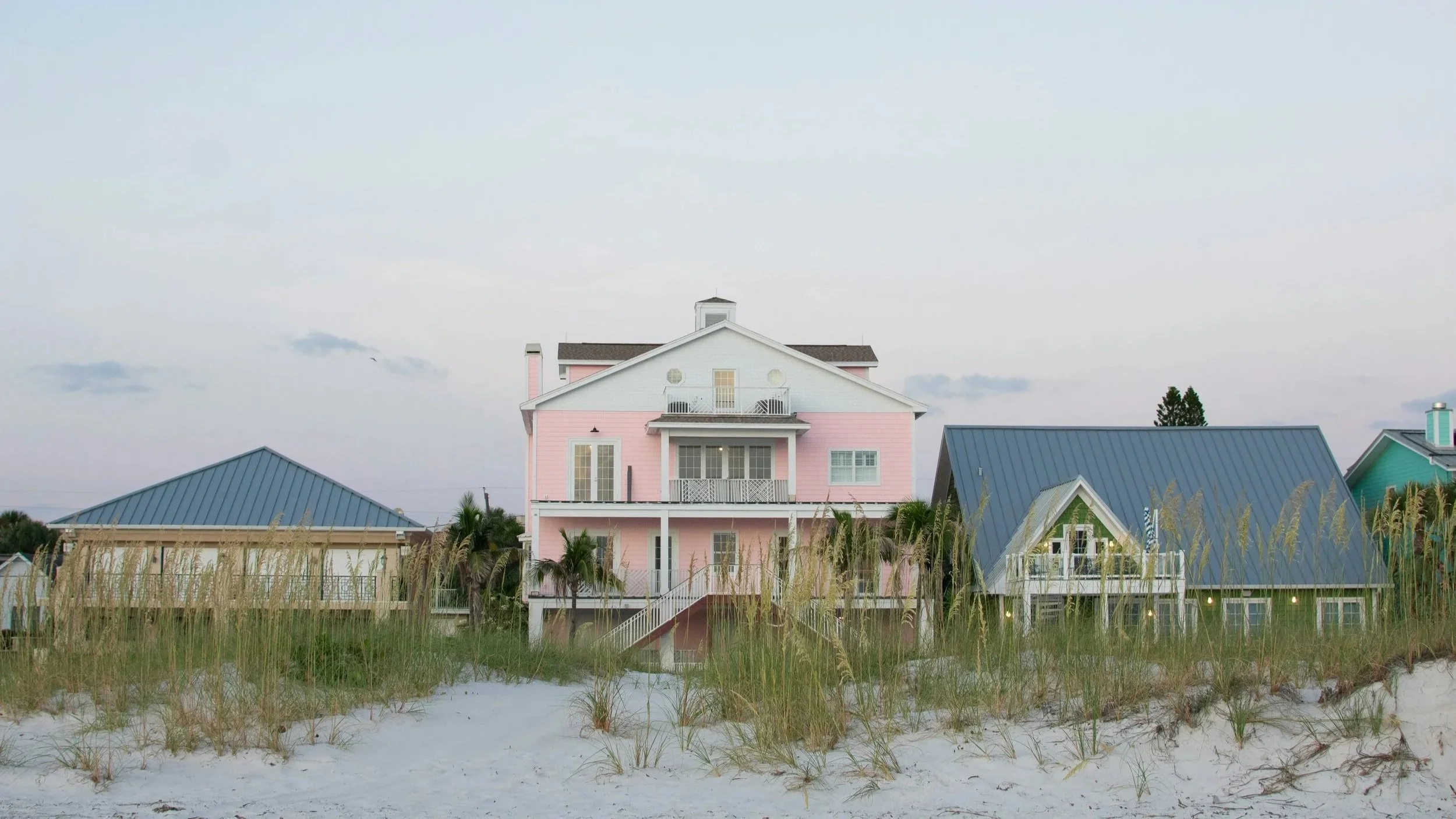
Photo credit: Juliana Uribbe | Unsplash
It’s the secret dream of a certain kind of man to have his face on a series of billboards along Highway 17 heading towards the sea, and in the case of Paradise Dave–the current one, not the original–each billboard is a big, flat lie about the color and size of his teeth. The real Paradise Dave, the father, was just as much of a son-of-a-bitch as his own son, but he had strong, bright teeth at least and would look you in the eye when he screwed you over.
Dave II is telling me now that the government is paying people more to stay home than he can afford to pay them to work, so I’m on my own for the rest of the summer. He’s looking everywhere but at me when he says it, and I can hardly see his little gray teeth. It’s like they’re trying to hide, ashamed of themselves, as if it was their fault and not his that they never get brushed.
“Thanks for being a team player,” Dave II says. “Thanks for having that Paradise Rentals spirit.”
What pisses me off the most about him is that he’ll identify as an entrepreneur, when all he’s done is inherit some rental properties and squander their value.
I have a theory about Dave II, and, by extension, all people. I think the explanation for Dave is that he was shaped by the office he sits in, unchanged now from when it was Original Dave’s office. The teamwork posters, the crochet on the wall in small thread letters saying the customer is always right. I suspect the places we think we’re in charge of decorating are actually forming us. (The walls of which, in this case, are thin enough that my kids, Will and Rihannon, can hear our conversation from outside on the porch.)
The Original Dave, say what you will, would never have called it anything other than what it was, would never have blamed the government. He would have just looked me in the eyes and told me it wasn’t about whether or not he could afford it, it was about whether or not he respected the work enough to pay more than minimum wage to anyone other than me.
Do I respect Dave II, on the other side of the desk? I do not. But I look at a picture he has, of himself and the Original on a golf course, arms around each other’s shoulders. Original Dave without even the hint of a smile. I look at that and then into my own heart, and I can find some pity.
They don’t look alike, the Daves. Dave II is soft all over, whereas Original Dave, up until the moment of his death (a sudden, absolute event, allegedly painless, on the very same golf course), was wiry, angular, like some well-preserved medieval weapon.
I consider how this news will impact the summer for my children, now helping me for free: Rhiannon will still be able to work some nights at Teach’s and pick up tips, but this means no football camp for Will, no mowing lawns for extra cash.
Cleaning the beach houses isn’t a bad life for them, though. I hope they think that way. They get to ride in the golf cart all day and spend time in someone else’s air conditioning. I make sure there’s some money in their pockets at the end of the week, and I pretend not to notice the cooler they use for the secret beers the guests leave behind.
I let Rhiannon drive the golf cart to House 8, in the far arc of a cul-de-sac, shaded by trees, nearly in the coastal forest itself. Rhiannon (named for the song–not my idea) walks ahead of her brother. Will has the stature but not the temperament for football, and Rhiannon is taller even than him.
They can vacuum, dust, put soap in the showers. I trust them much more than the work I’m allowed to give them, but even with the limitations I can get through twice as many houses in a day than I can without them.
I drop them off at 8, then go to 11. I’ll deep clean and double back to 8 and not have to do all the little stuff they handle.
An hour later, I’m staring at this painting on the wall in 11. The art in all the beach houses is the same. Bright colors, somewhat distorted wildlife. I had high hopes for Rhiannon when I told the kids that art would be where the money was. She spent a week trying to produce a bright flamingo, standing on one leg in reflective waters. I have always wondered what it looked like in her mind. Maybe she believed the work was beautiful, but in this world I had to force Will to be nice with the sharpest look I could muster.
Distantly, I hear my phone on the table. The call is from Will. They call sometimes, to ask questions or tell me they’re finished early. I always answer the same way, with a joke they don’t understand.
“The call is coming from inside the house,” I yell.
“They’re early, Mom,” says Will.
Check-in isn’t until two. They’re several hours early.
The position of House 8 within the trees means it stands all morning in the shade. It’s in a shadow when I pull the cart up, and I walk in to see my children facing a family.
The dad wearing some football shirt from a college in the north. The mother’s lips upturned and creepily swollen by filling. On a sofa, twin daughters full of the youth their mother is trying to hang on to, both on phones. Will and Rhiannon have, probably without realizing, put the kitchen island between themselves and these people.
The fact of the matter is this family shouldn’t be here, but Dave II has one rule of business–the customer is always right (this rule, like everything else of his that’s worth a damn, came from his daddy).
This dad is looking at my children the way a man looks at the dog he never wanted. As for the mother: a week in salt air is going to ruin this woman.
“Sorry for the mix-up,” I offer.
“All good,” says the dad, looking around. The mother just nods.
Reinforcing my theory on space and formation of personality, a game I play when I meet new people is to imagine what their homes have done to them. This family, it seems to me, is the product of a home that isn’t allowed to get dirty.
“We must have misread the thing,” says the dad, reluctant to admit even a hypothetical mistake.
It is, at worst, a minor inconvenience. But, as Dave II reminds me in the office later, the customer is always right and therefore never in the wrong.
“We don’t rent out just beach houses,” he says. “We facilitate vacations. A vacation is, in the truest sense, an escape from reality. A perfectly clean house isn’t real, it’s part of the vacation. Whereas children cleaning is very much part of reality, you see.”
Dave II is jittery while he says this. There was much to admire about Original Dave as a business person, but I don’t think it would have killed him to give his son one hug.
He pivots then, looks at Will and Rhiannon, nearly shouts his thanks at them for being team players, in a voice that would be appropriate for kids half their age.
“Paradise Rentals is a family,” he says, and gestures to all of us. “I do want to thank you all for showing that family spirit.”
Dave II’s chair strains on his leaning back. He’s a large man, but not in the sense that he’s powerful. For his part, the narrower Original evidently had a big heart in there, but not in the sense that he was kind.
Before we head inland for the day, I like to let the kids run around on the beach near the Paradise Rentals properties.
I like to cut them loose and tell them I’m taking care of one last thing or hitting a library, and sometimes I do. Often, though, I watch them from a distance. When they were younger they always played well together. They still do sometimes, but lately Will just sits while Rhiannon charges into and back out of the waves.
When she’s done, she tells Will ghost stories about this part of the world. It’s the graveyard of the Atlantic, more shipwrecks per square mile of ocean than anywhere else in the history of the planet. She is good at the stories: her ghosts are all informed by longing, run aground or against the rocks or in storms in search of a better life for their families in the new world. Will recounts them in the car after, and Rihannon is getting better at not correcting him.
She is a much better storyteller than she is a painter.
I’m watching them from the widow’s walk of House 12, beachfront, a popular rental.
Today they go straight to sitting, the posture for Rhiannon’s stories. They maneuver the secret cooler in such a way that they think no one can see it. Rhiannon speaking seriously, Will rapt, wind going nuts in both of their hair.
Then they see the family from House 8, making their way through the dunes.
The twins have the same cold demeanor as their mother. She is in something like a shroud, a billowing garment she can’t stop from hugging the front of her body through the wind. Dad lags behind, leading an old woman who had not been there this morning. She clutches his hand, takes soft uncertain steps in the sand. Gently, he helps her lower into a chair and she points herself at the waves and stares at them from behind dark sunglasses.
The twins eat something I can’t make out from this distance. One of them waves to Rhiannon, offers her some, walks over to her.
I turn, make sure the sheets are fresh in the bedrooms of House 12, and when I come back down to the beach my children are ready to leave.
Our drive is twenty minutes inland on 17. Put another way, we live fifteen miles’ worth of decreasing property value away from where we work. To get home we pass beneath four billboards displaying Dave II’s teeth dishonestly.
In the night, Will and Rhiannon wait until they think I’m asleep and sneak out. This is a lost art, the sneaking out. I try to be bothered more by it, but I figure from time to time a kid ought to sneak out instead of holing up in a bedroom doing God knows what on a phone.
When they sneak out, they do it together, and only on summer nights when Rhiannon isn’t working at Teach’s. Nothing bad enough to keep them from coming back has ever happened.
I can’t bring myself to stop them, even though I can’t sleep when they’re out. So I make instant coffee and drink it in my bed in the dark until I hear the door opening from their return. I pretend to be asleep, and can sometimes drift off again until morning.
I can’t sleep tonight, but I’m committed to the illusion that I’m asleep, so I lay in the darkness and hear them make their way back to their own beds, imagining where they might have gone.
The next day there are no early families, no lectures about teamwork.
I send the kids to finish House 12 and I go into 14. I can watch their work intermittently through the windows from across the street. Further down the street, House 8 looms, shaded in the morning. That close to the trees, it’s the kind of house that can get spiders, and I find myself hoping for them in spite of the books I have been reading about positive thinking.
I watch the father emerge, stand on the second-story porch that overlooks the driveway. Wearing a differently colored shirt for the same football team. I see him empty a mini bottle of something into a mug.
When the time comes, the kids and I switch houses. It’s clear they’re in the middle of some argument, but they shut it down when we’re close enough that I can hear them.
The humidity outside is crushing. Will wipes fog off of his glasses as soon as he sets foot outside.
“All good?” I ask.
The frogs are thunderous. Any more humidity and it would be raining.
“We’re fine,” says Rhiannon.
Across the way, the old woman has come out of her room. There are rooms on the ground floor of some of the more expensive houses. She stands in the driveway and looks out. I see it staged in front of me like a play: on the porch above her, unknowing, the father drains the last of whatever was in his mug and goes back inside. The old woman just stands there, maybe waiting for something.
A house is someone else’s memory. Even in your own home, you live among things that a past version of yourself thought would make you happy. In the constellation of properties in the Paradise Rentals suite, you are at the mercy of the interior designers hired by two generations of Daves, crafting surroundings engineered to be the least offensive to the most people. They search themselves for something pleasant, and when you walk into one of the houses you are walking into someone else’s idea of pleasantry.
He is wrong about almost everything, but one thing Dave II is accidentally right about is that what Paradise Rentals sells inside its houses is not reality. It’s hard not to wonder what too much time spent outside of reality can do to a person, or to a person’s children. To stay too long is to have your edges rounded. Like the havoc a week of salt is wreaking upon the woman in House 8, but in this case, it’s upon your soul.
I sometimes have to shake my head to clear it of the unreality. I’m doing that when I come out of House 12. And I see that down the street Rhiannon and Will are talking to the twins.
I drive the cart over, but by the time I get there the huddle has broken up and the twins are walking towards the boardwalk.
“They seem nice,” I say.
“They’re alright,” says Rhiannon.
Will is still wiping his glasses.
Tonight, Rhiannon takes the car back to tend bar at Teach’s almost as soon as we get home.
There was a time when, in the absence of Rhiannon, Will and I would watch a movie together or complete a puzzle, or I would teach him a card game. Tonight, the two of us eat and he slips back into his room.
I spend some time wondering how our house has formed us. Wood paneling, a print of the Cape Hatteras lighthouse. Alone in his room, Will reads stories of ghosts and pirates and the ghosts of pirates. He’ll compare what he reads with his sister’s version of the stories and measure the textbook versions against her embellishments. Often, in the morning, he will tell her he prefers her version.
At the end of the week, I find myself once again in Dave II’s office. He does this sometimes, dwells on a conversation he feels badly about. We used to do little pep-talk huddles on Friday mornings, when there were more employees.
“I should have been more on your side,” he says.
He’s leaning forward on the desk in an apologetic way. Original Dave would never have let anyone see him in a weak posture. I get that Dave II is trying to be nice, but this is exactly the kind of wimpy bullshit thing I’m talking about with him, and it’s probably part of the reason he can’t afford to pay a real employee to help me out.
“I meant it when I said we’re all family. I want you and the kids to stay in one of the houses this weekend, on me. We had a last minute cancellation, it’s too late to re-book.”
To his credit he does think he’s being generous, but it’s terrible for business.
Terrible or no, though, we’re in the rental that evening, House 20. Watching the cable, running the AC so cold we need blankets. Our revelry is mitigated somewhat by the knowledge that whatever mess we make, we’ll be the ones cleaning up on Monday.
I make us a simple dinner: shrimp in garlic, pasta, cover the whole thing with white wine.
The kids sneak out around midnight. Will is the loud one, clumsy on his feet. Whereas Rhiannon, true to the song, is like a cat in the dark. These houses are full of creaks and groans, though.
I wait to hear the door slide shut before I get up to follow. I don’t know why. Something about them sneaking out of a house other than their own has me worried.
They’re barefoot on the road. No one would dream of doing this in the day, and even at night the asphalt has retained some of the day’s heat.
I keep a safe distance, but in the frogs’ night noise and the dark of these cul-de-sacs they wouldn’t notice me if I was on top of them.
They make a couple of quick turns and approach House 8.
Rhiannon positions Will behind a bush, and she knocks softly on one of the ground floor windows. A moment passes, then a light comes on inside. The curtains split and the light is emanating from behind one of the twins, who casts a small shadow in Rhiannon’s direction.
I can’t hear what they say, but at the end of the exchange Rhiannon slips money in through the window. Whichever twin it is inspects the bill and turns around. Then, moving to some unheard music, she starts to sway, rolling her shoulders, gliding her hips.
She slides the straps of her sundress off her shoulders, turns back around and, in the turning, has put on a new face. She can’t possibly see Will but she is looking past Rhiannon in his direction. She slinks in such a way that the light dress slips off entirely, and only her dark hair covers her breasts.
Then, behind her, into the pool of light, wanders the old woman.
I see Rhiannon drop. She crawls out of the square of light thrown by the window.
The twin doesn’t move though, and as the old woman speaks I can see that her eyes, uncovered by the sunglasses, are milky and unseeing. Rhiannon cannot see this. She sits in near darkness and her chest rises and falls with panicked breathing.
I can’t hear what the twin is saying to the old woman, but like any mother, I have a sense of the conversation. The explanation, the dishonesty, the reassurance. The old woman’s sightless eyes scanning for nothing, unaware of what’s right in front of her.
This twin does not even bother to cover herself. Sleek in the room’s light she turns and pulls down the blinds. Rhiannon takes Will by the hand, out of the bush and quickly into the night. I’m standing behind a thick tree, and in their panic they walk right past me.
Editor’s Note
R. Hunter Whitworth’s “Graveyard of the Atlantic” is filled with characters and images that misrepresent or obscure reality. As you might expect in a vacation town, everything is covered with a veneer–right from the opening paragraph when we meet Paradise Dave and his lying teeth. Later, Dave’s mantra about “facilitating an escape from reality” echoes the literal veneer that he’s manufactured for his own image. The beach house guests, too, live in a fantasy world with performative rituals of wealth and beauty.
The story’s title comes from another hidden truth–the graveyard of ships that lie wrecked beneath the serene surface of the ocean. Interesting that the old woman’s unseeing eyes ultimately expose the falseness of Paradise Dave’s fabricated world by reminding us that objective truth is not determined merely by what we see. In fact, a facade is only useful to those whom it is capable of seducing.
And speaking of seduction, the final scene reinforces the hollow nature of constructed reality with its transactional climax that could have been lifted straight from one of Rhiannon’s ghost stories.
Josh Boldt, Editor
Story Track
The mother in R. Hunter Whitworth’s story (who is curiously never named) is a watcher, an observer of people. She watches Paradise Dave as he lectures her. She studies the guests of the resort through windows as she cleans their cabanas. And, whether her kids know it or not, she is always keeping an eye on them—when they’re at the beach with their secret cooler, or while they tell each other stories among the crashing waves. She even follows them on their clandestine adventure and hides in the shadows without alerting them to her presence.
Although the lyrics of Lucinda Williams’s “Side of the Road” aren’t an obvious match (sometimes the Story Track is more about the vibe), the woman in Williams’s song reminds me a lot of Whitworth’s protagonist. Something about the idea of wanting to know how it feels to be alone but still in the company of those she loves, even if just for a few moments. It’s more about the way she longs for some sweet moments of agency, for a taste of autonomy, in a life that is consumed with the need to care for others.