
And the World Was Wide Open
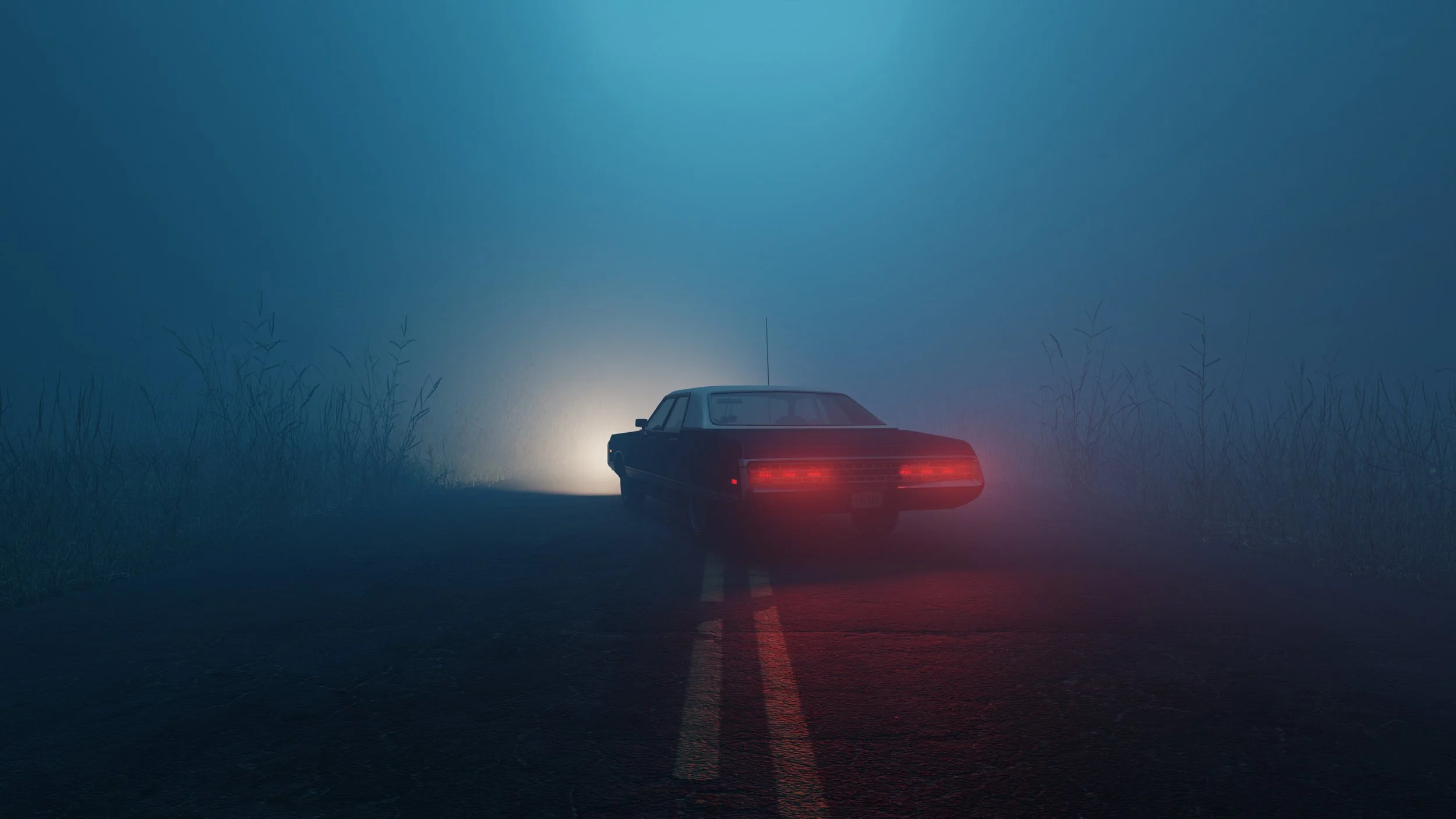
Photo credit: Crane Design | Adobe Stock
The young cashier peered down into the open register at the neat rows of bills and coins, the latter of which were all pooled loosely together in a space far left. From that morning he could recall the inventory: seven one-dollar bills, one five, three tens, two twenties, and a dollar and a half in change. There had been four customers that whole day and they’d all paid with credit.
Standing across from him now was a man with his left hand stuffed into his jacket pocket. The man forced a menacing smile and couldn’t stop licking his lips. Under the pale glow of the fluorescents his dirty blonde hair shone like fake gold.
“Now,” the man said, “don’t be a dummy or a hero.”
The cashier stammered, his arms and hands seemed to forget they were attached. The man’s face took on a look of hunger. His mouth held too much saliva—some of which was pooled in either corner of his lips—and each pupil took up nearly his entire eyeball. Impatient, he lunged over the skinny counter separating them and, with his free hand, clutched at anything that felt like paper.
The man had been in and out of the store in two minutes. Outside, the car, an old Ford hard-top with chipped black paint, was running, the hood hot to the touch.
The cashier, still inside, stood dumbfounded facing the empty register. The shrill squeal of tires in the distance brought him back to reality. Alone again in the silence and aftermath, he recalled something and smiled. Underneath the drawer of the register were two hundred-dollar bills that he always kept hidden. Mr. Harlow had taught him that. He laughed to himself, repeating the wise words he had been told. “Never reveal what can’t be seen with two eyes.”
The night came on fast. Sunset left no reward for the day endured, only blackness.
“Hot damn!” the man in the Ford howled as he drove. “Hot damn ain’t I good!” He was jetting down the loneliest stretch of road in the state, just before Florida met Georgia, leaving behind the only gas station for the next 55 miles. He was good and nobody could tell him different. The whole world was wide open, there, just ahead of him, beyond the yellow glare of the headlights.
Giggling to himself, he hummed a tune that some redneck used to sing in the yard at Union Correctional:
Rocky Top, you’ll always be
Home sweet home to me.
Good old Rocky Top,
Rocky Top, Tennessee.
It was then he decided to go north. Just north, nowhere in particular. Somewhere that was nice and quiet, maybe Macon. Hell, he thought, I could even kick dust all the way up to Nashville. He soon lost his train of thought and began patting the small, hard wad crumpled in his jacket pocket. For miles he talked aloud to himself of nothing in particular. Thoughts zig-zagged and wandered around in his mind and out through his mouth.
As a child, people on the street had always thought him to be some special case with the way he conducted these outward confessionals entirely to himself. “Hell,” he blurted aloud, “I don’t think that dummy called the blue. Even if he did, by the time they crawled offa their fat wives I’ll be over thatta state line.” He let loose a nasally chuckle that left an odorous trail in the breeze. This night, the entire world, was so wide open. It could fit right in his pocket.
The old black Ford kept a steady speed with the red needle pulsing at 85. The tires felt just right, like driving a straight line on an oil-slicked road–it was all too easy.
Just then, and far up the desolate strip of asphalt, his headlights shone on a small blue speck—impossibly small—and he squinted his eyes to see. What started out as a faraway fallen star quickly became a formless blob, a tall and pale blue flower, then, finally, a fine mess of denim and almond-colored hair.
He eased the car to a pedestrian speed. He couldn’t believe his luck and had to take his foot off the gas to make sure his eyes hadn’t fooled him the way they do, like mistaking two bills for three, or a ten for a hundred. There, on the side of the road was a woman, a hitchhiker, he supposed. The first woman he had seen this close up in two years that wasn’t his attorney or a lady cop. Those jeans, he thought, could tear a hole through the night sky and make a new day. She hadn’t so much as parted her lips to speak before he had flung the door open and, with a yellow-toothed grin, offered, “climb on in, sugarpie!” It came out as an excited yelp. She took one short step toward the rolling car and her figure was swallowed by the open door.
The inside of the car now smelled faintly of jasmine mingled with freshly-cut grass. She looked like she could either be seventeen or twenty-five. Her body was slight and her face was riddled with many tiny, brown freckles. With her, she had only a small bag that she held close between her legs. In the low light he took note of her clothes, which were specked with dirt and what looked to be grease. He kept on smiling and fixed his eyes back on the road.
“Thanks a ton for stopping,” she drawled softly, “I broke down ten or so miles ahead. I been walking down this road nearly two hours—you’re the first soul I seen all night!”
His teeth crept through the tiny rift in his smile as he spoke. “The pleasure’s all mine, sugar.”
Out the corner of her eye she gave quick glances in his direction. Like she was trying to decide if he was shielding something, a thing neither of them could see. She studied his blue eyes. They were wildly calm like the waves of the Atlantic, but his smile was that of a hapless grifter. The inside of the car was remarkably tidy, in contrast to the dusty-clothed man behind the wheel. Her eyes trailed slowly to the wad sticking out of his jacket pocket and the small one bulging in his jeans. She shifted in her seat, causing the leather to squeak, and cutting the silence between them like a razor.
She sure is pretty enough, the man thought as he licked his teeth. Almost as pretty as Patti was. Almost too pretty. His brow furrowed as he recalled Patti and her beauty, how she just wasn’t right. She was touched, he remembered people saying. She was touched, but this girl didn’t seem that way at all. But there was something he couldn’t place. He gave her two quick, hard-faced looks and figured it out at last: her head was too large for her slight frame. He decided that she’d had been picked on relentlessly as a kid, but she’d grown into herself and her beauty had outshone this minor flaw. With this mystery solved, he eased back into his seat and resumed licking his teeth.
About two-and-a-half miles had passed since he’d picked her up. There was a quick flicking sound and then a small flame lit the inside the car–a tiny orange ball of light that seemed so large as it inched closer to the cigarette between his lips. He offered her one and then his name. “Billy. Billy Easton. Tallahassee born and bred.” His every word carried a stench and flowed with pride. Billy looked over at her expectantly as she dragged slowly on her cigarette.
“I’m Sadie-Mae,” was all she said.
Billy went on to recount the story of his life. Of how he’d grown up in Tallahassee, of the small home in the woods he’d shared only with his mother. About how, at sixteen, he’d left home for Miami, for the neon moonlight and slick, tanned bodies lined in rows along the beach. “But,” he added, a touch of solemnity rising to the surface, “one day ma got sick and I’s the only one could look after her.” So, like any son who loves his mother, he’d taken to stealing and cheating to get the money to care for her. And that, he emphatically stated, was how he’d wound up at Union Correctional–The Rock was how he referred to it. “I just been let out on good behavior, too, heh-heh-heh.” He had meant for the chuckle to be menacing, hoping she’d frighten a little and think him a bad man. Later, he’d reveal he was truly, deep down, sweeter than a Chickasaw plum. Sadie-Mae said nothing, and her face held a sort of vacant expression. Billy thought she might be touched after all. Either that or she was partially deaf.
As he stole looks at her, Billy wondered how lucky she must feel, being all that little package of pretty—despite, or in spite of, her minor flaw—he thought she must feel so grateful to have been picked up by him and not—
“Say,” he burst out suddenly from his thought, “you can count yourself a real lucky lady.” He gave her no time to question this before he went on. “Why, with all these crazies out and about, you can hardly count on the kindness of strangers…but you just happened ‘pon the last gentleman this side of the world—it seems like everday you see somethin in the news about death and whole heaps a other ugly things. Just like that fella down in Gainesville went and strangled all those co-eds. Or that one up in Georgia, near Columbus, the one they’re callin the ‘Lord’s Prayer Killer’ on account of him placing the torn-out scripture beside the bodies after he does ‘em. They say he done four already and spectin more if he ain’t caught.”
With every word he grew more upset, and his knuckles turned pale around the steering wheel. ”It’s just a shame we got to live in such a ugly world…hell, my cousin in Jackson told me his lady got caught by a pervert one night walking through the park, stole her panties clean off her, and he said she ain’t left the house in some weeks.” Billy sighed and his voice began to crack when he spoke next. “That’s just what the world done turned into, ain’t no innocence left, it’s all been used up and all we got left is a whole heap a ugliness…” His final words trailed off and hung over them both, thick as fog. Another two-and-a-half miles passed. The dark around them seemed like one big, ugly mouth preparing to swallow them whole.
Both of their cigarettes had gone out and there were no more. In all his jabbering, Billy had forgotten to ask her about herself, and he felt embarrassed. “P’shaw, don’t I feel dumb—I done told you all about me and never asked about you or your folks. Where they make pretty dolls like you ‘round here?” His gentlemanliness restored, Billy bucked up his shoulders and chin a bit and kept driving steady.
“Not too far from here,” Sadie-Mae said, the words sounding like they were being filtered through her teeth. “From Georgia, just outside of Columbus.” The look on her face remained vacant except for the eyes which were now wide, glaring ahead at the empty road. Between her legs she still held tight the one small bag she’d brought along with her. It was too dark to see, but Billy could hear her opening the bag and taking something out. Through several successive glances all he could make out was that it had the same shape and thickness of a brick.
The steering wheel was slick with sweat. When Billy next spoke, the vigor was gone from his voice, what replaced it was a feeling long foreign to him: fear. “Say, your car should be coming up here mighty soon.” Rather than an observation it sounded more like he was trying to convince himself of a truth he could not see. As he searched for his next words the little trigger in his throat jerked up and down. Then, all at once, he took a deep breath and steadied himself behind the wheel as he had done before.
“Looky lady,” he said with newfound stillness, “if you want somethin outta me, all’s you gotta do is ask, don’t try and con a fella’s done nothing but show kindness.” With this last word his porcelain mask of bravado began to crack. “Kindness in a world filled with a whole heap an ugliness.”
Though he had tried his best, the words reached neither ear nor heartstring. It was true that this had worked in the past when Billy knew he couldn’t get that thing he wanted with his smile alone. And sometimes it just needed a few moments to take effect. He had the feeling that such was about to occur when he felt Sadie-Mae’s quiet gaze fixed on him.
“Billy,” she said, “all I want you to do is to pull the car over right here.” When she spoke, the words came out flat and lifeless as if they had come from a card. Billy obeyed, slowing the car down, and then finally came to a stop on the side of the road. The passenger-side door overlooked a steep ditch. For miles, all the eye could see was a jagged sea of inky black trees.
Without speaking, Sadie-Mae opened her door and stepped outside. She circled around the car to the driver side, where Billy noticed that something metallic against her waist gleamed sharply in the moonlight. “Leave the car running, please,” he heard her voice from outside,” and step out of the car.” From behind, she led him to the crest of the ditch where she told him to get down on his knees. His broad shoulders began to shudder, and he bit down on his bottom lip as he began to let out little, shaky sobs. As his kneecaps met the ground, tiny gravel pieces prodded them, shooting pain from the tips of his toes to just behind his eyes. His baby sobs gave way to a collage of sorrow. He became nothing more than fiery tears and howls of pain. He begged, he pleaded, he hoped this was all some kind of trick.
Sadie-Mae, still standing behind him, looked down at the back of his blonde head and patted him on the shoulder.
“All your pain,” she said, “is not for nothing. The grief we cling to so desperately has become our highest form of social currency. Every day we feel sorry for ourselves just for living, we’ve grown to believe our grief should be taken away, that we should be pitied and paid back our weight of suffering in gold. But, Billy, don’t you know that God created our grief? And weren’t we told that all He touches is perfect? So who are we to beg for this perfect creation to be taken away from us? I’ll tell you why we do it: because when we feel weak we know how to do nothing else.”
“You should count yourself lucky, Billy, to have met me. I can show you that your pain and weakness is not for nothing, that it’s the cause for something greater.” On the crest of that ditch, Billy continued to cry like the minute he was born. He called out for his mother, wishing for a glimpse of her somewhere in the darkness. Sadie-Mae bent down at that moment and kissed the back of his head.
Billy Easton gazed upon that wide open world. It looked back and showed him nothing. He remembered the small wad of crumpled bills in his jacket pocket and the dumb look that the cashier had given him. There was something he knew, something he had forgotten, that one fact he had failed to notice. And then it clicked.
Editor’s Note
*This is the author’s first story publication.
Willie James Bess’s “And the World Was Wide Open” is the first manuscript we’ve received that was written on a typewriter. I have to say, in this crazy AI world, seeing those typed pages was a refreshing throwback to a simpler past.
This theme of retro nostalgia carries through in Bess’s story. It’s a classic tale of criminal romance. No cell phones, no fancy technology—just a fast car, a hot gun, and a flash of skin. You know, nothing but the essentials.
Josh Boldt, Editor
Story Track
Imagine you’re Billy in “And the World Was Wide Open” by Willie James Bess, driving down a dark highway, pocket full of hot cash, thinking you’ve got the bull by the horns. Rattlesnake Milk’s “On the Road” fills the car as you drive. You spot a woman on the shoulder with her thumb up. “She was on the road / Mama made her livin' on the road.” Do you stop? Pick her up? You’ve only got one thing on your mind. Trouble is, so does she. “She gon' get high, higher than the devil, every time she hear him makin' noise...”