
Sundowning
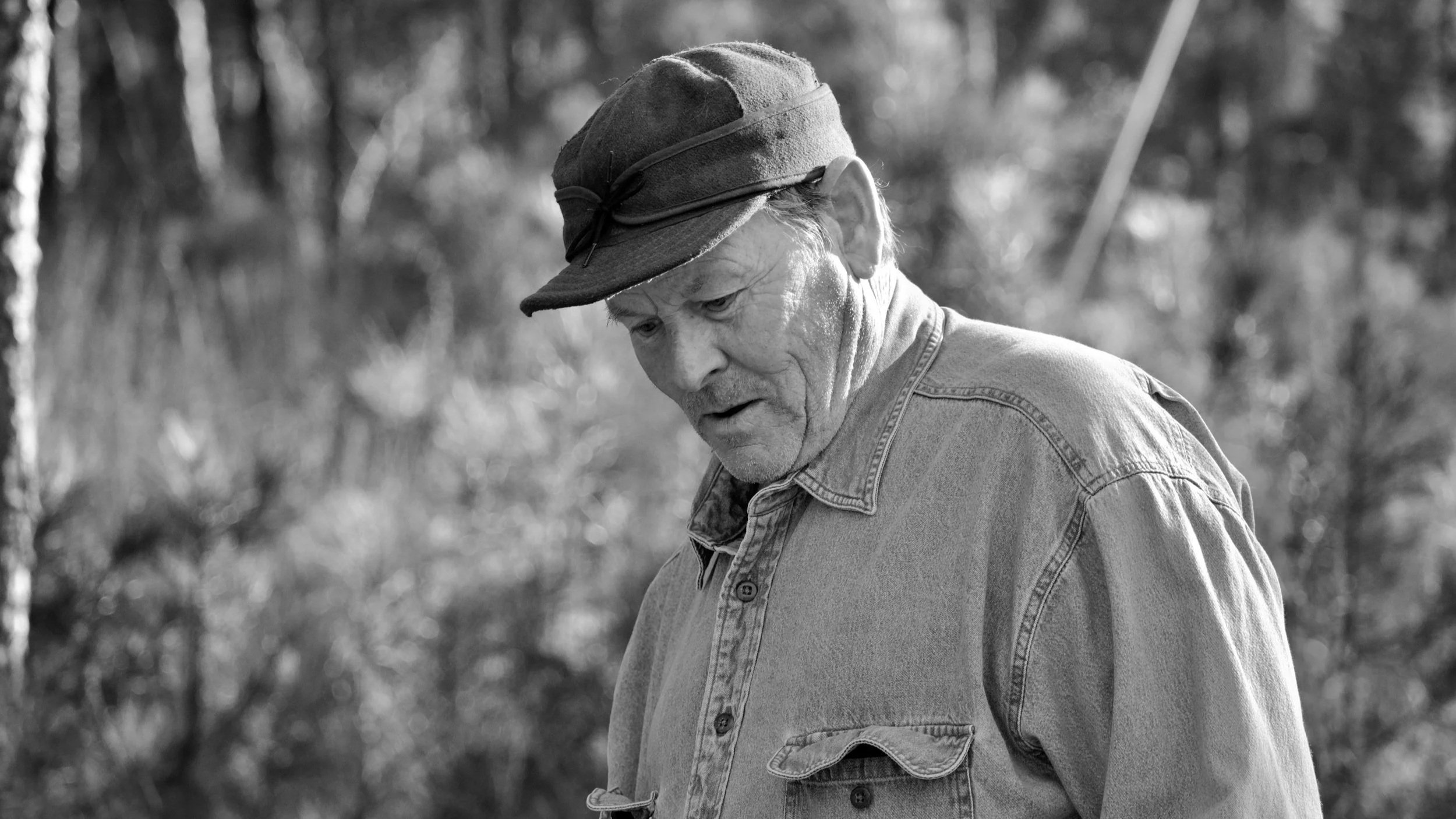
Photo credit: cool guy jon | Unsplash
“I can’t tell much difference between these trees anymore,” Joe Dilton muttered as he scanned the Western Pennsylvania backwoods that surrounded him. The old man smoked a cigarette, ashing where he pleased, trying to make sense of the landscape as the sky and earth squeezed him with each breath. “Used to be better about it when I didn’t know there were so much.”
Joe’s son, Charlie, was entranced by the herds of clouds that settled in the pink sky of early summer, thin wisps of smoke skewered by branches of white oak and maple seemingly melting in the twilight. He watched the fading sun, the translucent moon, wishing that he could dissolve somewhere in between the horizon and the peaks of distant mountains. His gaze shifted, tracking pockets of the woods where random sounds popped. He swore that he heard water. Instead, the noises of his father struggling to walk, huffs and coughs each time the uneven forest floor got the better of the old man, clogged Charlie’s ears, filtering the sounds of the natural world into a disconcerting hiss.
“What was it Nesbo Ritter used to say?” Charlie asked. “Something like knowledge is really just knowing all you don’t know?”
“Well, feels more like something I had and lost,” Joe said.
“I really can’t speak to that.”
“You’re supposed to be the naturalist of our outfit, Ralph,” Joe said, laughing until phlegm throttled his joy, locking him somewhere between frailty and acquiescence.
Charlie accepted the chore of inhabiting ghosts, assuming the identities of the men that his father saw every time he drifted away into the past. Often it was his father’s long-deceased brother, Ralph, the last of the great bastards that inhabited their small county. After a year spent caring for his father, Charlie knew the look in the old man’s eyes, the glazed over pupils, his rebel spirit flailing like the small wick of a dying candle holding onto the remnants of a flame just to prove that it still had purpose. In his time of senility, Joe Dilton’s world was reduced to a single frame, a static image stretched until its meaning was lost. The present moment was a glint of light at the corner of his eyes.
“Where’d we take that young kid?” Joe asked. “One said he was from New York City?”
“You know better than me,” Charlie replied.
“Flashy son of a bitch,” Joe recalled and slowed his pace. “Until he saw the knife.”
“My bet is it was more the man holding it.”
“Might be onto something,” Joe said and began to fade. Slowly, he curled into himself, leaning against a tree to ease the pain that flared in his hips. An apathetic expression came over his face. He looked out at the furthest tree his eyes could distinguish, his mind drifting in a kind of purgatory.
Charlie welcomed the silence. With time to think, he studied his father’s face, searching for the truth in flesh that the old man’s tongue no longer carried. Scars over his left eye and on his chin. A missing canine tooth. The deep grooves in his forehead from decades of scowls and tyrannical glares. Charlie knew the stories. Some were efforts of grandeur the man told him directly. Others were rumors spun into mythological proportions by locals in his hometown. Honesty was like a shadow. It could be seen. It could be manipulated. Try and hold onto it, and you’d be left with empty hands.
A cool breeze startled Joe. In a flash, his shoulders dipped down, and his neck wilted. He took a deep breath and leaned forward, the weight of his rigid hands holding him in place like two stones tied to a sinking canoe. “Am I okay, Charlie?” he asked, his mind still hazy as if he was leaving a dream.
Charlie offered nothing more than a reassuring nod. Seeing the worry fill his father’s face, he said, “Not too much further, pop. I can help you the rest of the way.”
“You worry about yourself.”
Matching his father’s slower pace, Charlie followed him through the gaps between trees. Shades of green and brown bled into purple and orange skies as if everything around them was flowing toward one drain somewhere in the universe. Charlie kept a two-pace distance, waiting for his father to shake off the hangover of his latest episode of caducity. Familiarity with the location returned as Joe absorbed the small details of his surroundings. He crossed a threshold of dandelions that marked the beginning of a lush patch of wildflowers. Counting the flecks of purple and blue and searching the canopy that cut holes in the sun, Joe felt himself stabilizing. He noticed a clearing several feet ahead and looked back at his son. “You meant to bring me here, right?” he asked.
“It’s what you asked for,” Charlie responded and leaned against the nearest tree. “Past few mornings we planned it down to the step.”
“I can’t recall most things. I’m sure you know that,” Joe said as he examined the ground in front of him. Letting the many burdens of his life take him to his knees, he felt the warm wild flowers fold around his legs, licking the unguarded flesh of his forearms. The hard edges of his body melted away, and a tension in his throat faded. His soul, set loose like an undamned river, filled his chest and face as he pressed his hands into the dirt and remembered the faces of those who he buried in that ground. For the first time in his life, he hoped that eternity helped them understand.
“I can wait a little while longer,” Charlie said. The rare instance of vulnerability pulled him closer to his father. The flowers disguised his heavy steps, each one ringing in his mind like the toll of a bell. He felt tender and crouched behind his father as if he were approaching a fawn.
“I got four of the names,” Joe said. “Two’re brothers so maybe that doesn’t mean as much. Last name of Kofax.”
“How many more are out here?”
“Can’t say. Sorta like trying to count blades of grass.”
“Maybe that’s best,” Charlie said.
“Best will be keeping the rest of this quiet,” Joe said.
Charlie exhaled, the effort pulling his head down so that it hung between his shoulders like an anvil on a string. “Nothing else you wanna say?” he asked. With a smooth swing of his arm, he slid his hand toward his lower back and removed a .32 Smith & Wesson revolver from the waistband of his jeans. Newly cleaned and polished, the nickel plating reflected a thin ray of sunlight, flashing it back toward the canopy. Charlie eased his finger around the trigger. Dead skin grated against the warm metal. He stared at the back of his father’s head, visualizing the simple action of lifting his arm and firing.
Irritability set in, and Joe felt the fog lift inside of his brain. He readied another cigarette and kept his neck steady, battling his instinct to turn around and look at his son’s face. “I’d rather this stay respectable. And I’d rather not see it coming,” he said.
An unexpected laugh broke Charlie’s concentration. He squatted and sat back on his ass, rocking back and forth like a toddler making his own fun, rubbing the sweat from his forehead with the sleeve of his peaceful arm. “Well, maybe I need a minute then,” he said and used his torso to hide the revolver from his father’s view. Hurrying to his feet, he nearly fell over.
“You promised me this,” Joe mumbled and spat. He turned to watch Charlie, seeing his boy’s shadow grow thinner as he walked back toward the wall of trees.
In his back pocket, Charlie found a handkerchief and used it to wipe his face. He kept it over his eyes as he placed the revolver down onto the ground. Sweat pooled under his nostrils and the corners of his lips. He stood still, pressing his thumbs into his temples until he felt lightheaded. Once the sensation subsided, he opened his eyes and felt disappointed. The revolver was resting right where he left it, wrapped in stems of butterfly weed as if it had grown from the soil, waiting to help Charlie fulfill his promise. The sounds of birds singing, the wind rustling branches, sounds that normally would’ve soothed him now acted as a tortuous symphony, a reminder that no one else was coming. Embracing the quiet, Charlie tried to block out everything except the sound of his own heartbeat, counting each breath in between.
“I told you not to bring me this way for a while,” Joe hollered.
Charlie’s moment of meditation was ruined. He kept his eyes closed and listened for movement.
“You promised me that, Ralph,” Joe yelled, this time loud enough to force nearby animals to scatter.
Charlie picked up his .32 and walked toward his father. Immediately, he noticed his father’s posture, powerful as if he were the younger Joe Dilton once again. Charlie approached him at an angle, watching his face, searching his eyes for the empty, lost stare. “I must’ve forgot,” he replied, tucking the revolver in his waistband, stopping his advance just short of arm’s length.
“Bullshit,” Joe said. Moving as if the terrain were different, he got up and walked, ignoring his body's desire to crumble. Stems snapped. Flowers burst like fireworks. He traveled no more than ten feet, destroying everything in his path. “This is too close to Meghan.”
The name bewildered Charlie, so he asked his father to repeat what he’d said. Hearing it a second time stirred a mass of anger and melancholy inside of him. Thirty-five years without a mention of his mother’s existence. Joe Dilton’s way of convincing his son that she was a figment of his imagination. Charlie saw her face, young and weathered, hardened by an unwanted life. He remembered her voice, soft but direct, as she instructed him on how to burn a piece of string that hung from one of his sweaters. He had trouble recalling any other time she’d spoken, had forgotten if she could sing. She was another ghost, one that never returned to his father until he needed her help finding an end to it all.
“I said, are you trying to be some kind of asshole?” Joe barked as he wandered over to a thick patch of grass, ignoring a limp that developed from walking without regard for his joints. With every step, he regained some of the youthful swagger that fueled his once-wild heart. “We put her somewhere around here,” he said, walking in circles. “I told you to plant gardenias to mark it.”
Wandering the narrow streets of his hometown for forty years, Charlie had seen the aftermath of his father’s actions in the faces of strangers. There was always a distance, a feeling of quiet grief that he witnessed with every passing glance. As he watched his father tread on the ground that was possibly the unmarked grave of his mother, he felt like a victim for the first time. “I didn’t forget,” he said, approaching his father slowly.
Joe looked down at the grass as if the story of what happened was written in the dirt. His eyes darted back and forth, catching details of the present and the past, mixing them together into a situation that he could comprehend. “She was gonna leave me here alone,” he said.
“Maybe she was just scared,” Charlie said.
“It was easy for her for too long. She was okay with all I did til she wasn't. That’s how it is, Ralph. Nothing’s wrong until it wrongs them.”
“Seems like she was doing you a favor.”
“What’s that?”
Charlie took advantage of his father’s confusion. He played the role of Ralph that his father’s mind had assigned him, hoping he could glean more information about his mother. “Taking Charlie, I meant. Leaving. Making it easy on you,” Charlie said.
“I don’t feel like talking anymore,” Joe replied and repeated his marching pattern of circles like an animal dumped in unfamiliar territory.
Charlie watched the old man trudge. He needed to look into his eyes and figure out if what he was hearing was the truth or a ruse meant to coax him into committing a mercy killing. Squeezing the handle of the Smith & Wesson, he found it difficult to dredge up any amount of logic. Even more difficult to find within was forgiveness. The weight of old age settled into his father’s fragile joints, slowing his pace and dousing the fire that once made him dangerous. In seconds, Charlie saw a lifetime of choices cripple the old man.
“Lost my lighter I think,” Joe said as he scanned his surroundings.
“I want you to turn around and take a look at where we are,” Charlie said, keeping the revolver hidden behind his torso.
“I know where we are,” Joe said, stumbling back and forth in the same pattern, using the blades of his boots to shift around the debris that covered the ground.
“I want you to stay still and just look at what’s out here.”
“I can’t walk much more.”
“You don’t need to,” Charlie said and stepped softly like a hunter, observing the old man’s every subtle movement, searching for any signs of deception. Fury outweighed curiosity, and he shoved his father to the ground. “You remember what you just told me about this place?” he asked.
“What’re you talking about?” Joe asked, rolling back and forth on the blades of his shoulders like an overturned insect.
Charlie raised the revolver and took aim. The narrow sight sliced his father’s figure into two halves, giving Charlie the option of which one to shoot and which to mourn. He heard a different world. The quiet death of every insect and leaf. The suffocating tree limbs. Drops of water evaporating. “Stay still now,” he ordered.
“Or what?” Joe said, looking at his son with the eyes of a killer. “You’ll do what I told you?” He laid his head back. “Already embarrassed me enough.”
Charlie stepped toward his father, keeping the gun aimed at his face. “Is she in the ground out here?” he asked and knelt.
Exhaling, desire and power leaving his body in a parade of elusive spirits, Joe closed his eyes for a moment, collecting himself and grinding the last bits of his civility between his back teeth. He looked up, feral as any other beast, and said, “Who?”
“Look at me.”
Joe followed the command and stared at his son like he was his greatest enemy, giving nothing away and attempting to take all that he could. At the close distance, he could hear the flesh on his son’s hands tighten. “Go on. While you got the fire in you,” he said.
Pulling the trigger would be easy for both men. It had been planned before the first frost of winter. Spoken about every day during spring. Refined to a step-by-step list of instructions that very morning. The problem Charlie faced as he looked into his father’s eyes, searching for some shred of verity in the man’s endless well of wickedness, was greater than the challenge of ending his life. Charlie needed to know if it was all just a game, a tactic his father was using to convert him, to carry on his legacy. It was a summoning of souls, an attempt to conquer innocence with brutality.
Neither man blinked. Charlie wiped his cheek and broke his silence. “You don’t get this,” he said and tucked the gun away in the waistband of his jeans. “We’re going back.”
“I’m staying here,” Joe said and prepared his resistance.
Charlie stood up and looked down at his father. “We’re heading home,” he said. “And you’ll want for nothing. For what’s left, you’ll lay in your bed and get all the time to rest. Plenty of time to think. You can wonder about today and the time that passed. You’ll think about everything and you’ll have to remember,” he said and forced Joe Dilton to his feet, ignoring the weak smacks the old man delivered to his back and shoulders. “And when you can tell me, we’ll make this walk again.”
Charlie Dilton was a good son. As he pushed his father back toward their home, fighting a battle of inches, he thought about his mother. The few memories he had of her played in his mind and made him feel eternal. She would not be forgotten. Not by the man who took her away. Not by her boy who would do all that he could to make sure she did not die in vain.
Editor’s Note
Contrary to what the current publishing environment would have us believe, sometimes it’s perfectly fine to have a slow burner. In fact, sometimes it’s even better. In Aidan Shousky’s “Sundowning” we don’t immediately know what this father and son are doing in the woods. The story unfolds gradually as we learn about the characters and their pasts. You have to pay attention to subtle cues, glean information from hints. You might not even realize until halfway through what is happening. The slow burn works here because Shousky provides enough context to keep us curious, to give us those moments where we ask wait a second, is this what I think it is?
Josh Boldt, Editor
Story Track
I remember the first time I heard Johnny Cash’s cover of “I See a Darkness” by Bonnie Prince Billy. It just about crushed me. A tale of two men dealing with very heavy stuff. Life and death. Charlie and his father are also navigating life and death in Aidan Shousky’s “Sundowning.” Between the lines of their conversation is an unspoken plea that each man could “somehow save [the other] from this darkness.” For Joe, the literal darkness of his chosen lifestyle and his fading mental state. And for Charlie, the darkness surrounding the death of his mother. I fear that neither man will find the peace he seeks, and that their darkness will not be illuminated.
Josh Boldt, Editor